
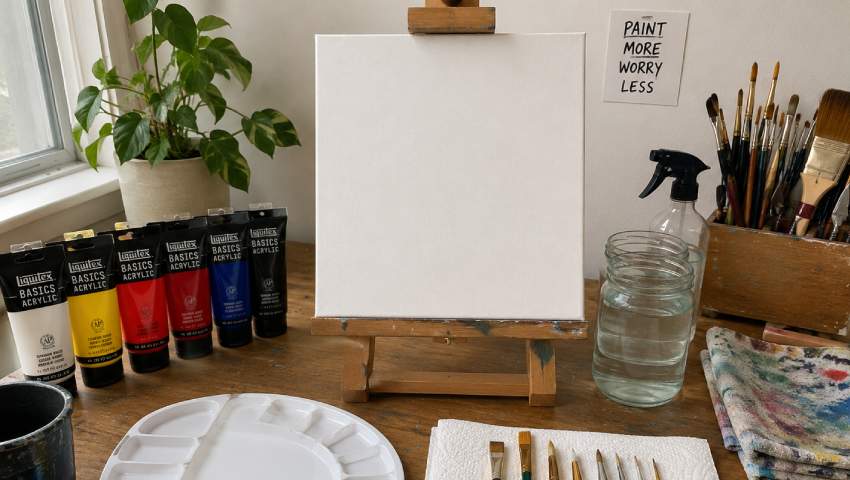
Pick a well‑lit, easy‑to‑clean spot
- Light Source: Natural north‑facing light is ideal; otherwise use a 5 000 K daylight LED lamp angled over your shoulder so it doesn’t cast glare on wet paint.
- Stable Surface: A solid table or a table‑top easel set to 15–30° helps reduce neck strain and prevents puddling on canvas.
- Ventilation: Acrylics are low‑odor, but pouring mediums and varnishes release vapors—crack a window or run a small box fan if you’ll use additives.
Protect your surroundings
| Area | Quick Protection Hack |
|---|---|
| Tabletop | Plastic tablecloth, taped down at corners, wipes clean or tosses afterward. |
| Floor | Drop cloth or old shower curtain to catch drips. |
| Nearby Wall | Push‑pin a sheet of cardboard behind the easel to block accidental splatter. |
Organize for efficiency
- Dominant‑Hand Side: Place brushes, palette, and a rag so you can grab without reaching across wet work.
- Non‑Dominant Side: Water jar(s) and spray bottle—keeps spills away from electronics or reference photos.
- Vertical Tools Rack: A mason jar of dry brushes, palette knives, pencils; bristles upright to preserve shape.
- Rolling Cart or Shoe Box Lid: Holds extra paint tubes, mediums, tape, and varnish in one movable tray.
Prep & cleanup station
- Sink Nearby: Mild dish soap, an old toothbrush for ferrule gunk, and a dedicated towel.
- Quick‑Dry Rack: A wire kitchen rack or mug tree lets washed brushes air‑dry bristles down so water doesn’t seep into handles.
- Trash & Recycle: Line a small bin with a grocery bag for painty towels; keep a separate container for paper palettes headed to recycling.
Setting up once—and leaving everything semi‑permanent if space allows—reduces friction so you can start painting in minutes and clean up just as fast when creativity winds down.
Essential Materials You’ll Need
| Item | Why It Matters | Beginner Tip |
|---|---|---|
| Acrylic Paint Set (student‑grade) | Vibrant pigments at a low cost; includes primaries + black & white for mixing. | Start with a 6–8‑color set—you can blend almost any hue. |
| Surfaces: pre‑primed canvas panels, stretched canvas, or 300 gsm acrylic paper | Acrylic adheres best to primed, non‑buckling surfaces. | Canvas panels (8 × 10 in) cost ≈ $1–2 each and are perfect for practice. |
| Brushes: flat (¾”), filbert (½”), round (size 4), detail liner (size 0) | Different shapes give you broad strokes, soft edges, and fine lines. | Nylon/synthetic bristles keep their spring and survive water better than natural hair. |
| Palette: disposable paper pad, plastic tray, or repurposed white plate | Provides a mixing area and shows true color. | Mist the palette with water every 10 minutes to keep paint workable. |
| Palette Knife (metal or sturdy plastic) | For mixing without staining brushes, plus impasto or scraping effects. | One medium‑size offset knife covers most needs. |
| Water Container (wide‑mouth jar) | Rinses brushes and thins paint. | Use two jars: one for the first rinse, one for a cleaner final rinse. |
| Rags / Paper Towels | Dab off excess moisture, clean edges, create texture. | Old T‑shirts cut into squares are eco‑friendly and lint‑free. |
| Masking or Painter’s Tape | Masks crisp edges and secures paper to a board. | Burnish the tape edge with a spoon to prevent bleed‑through. |
| Acrylic Mediums (optional): gloss/matte gel, pouring medium, retarder | Modify texture, sheen, and drying time. | A pea‑sized drop of retarder extends blending time by 2–5 minutes. |
| Protective Gear: apron, table covering, nitrile gloves (optional) | Shields clothes and furniture from permanent stains. | A cheap vinyl tablecloth doubles as a splash guard. |
| Bonus Helpers: spray bottle (keeps paint moist), hair dryer (speeds layers), easel (better posture) | Quality‑of‑life upgrades for comfort and efficiency. | If you don’t own an easel, tilt a drawing board against stacked books. |
Gathering these basics ensures smoother sessions—no scrambling for supplies mid‑stroke, and your tools will last far longer with proper care.