
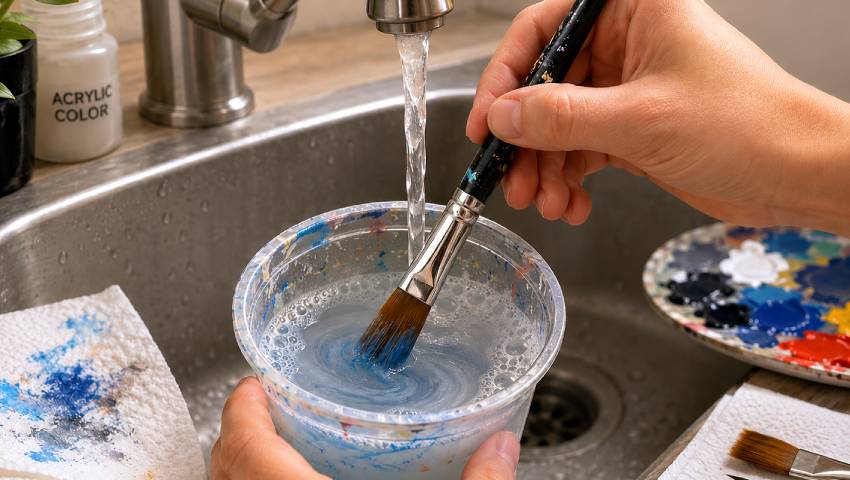
1. Rinse Immediately After Use
- Swirl the brush in a jar of clean water to dislodge most pigment.
- Wipe excess paint on a rag—not on the jar rim (which weakens ferrules).
2. Deep‑Clean With Mild Soap
- Lather bristles in lukewarm water and a drop of pH‑neutral dish soap or specialty brush soap.
- Gently massage from ferrule toward tip; avoid splaying hairs.
3. Comb & Reshape
- For synthetic brushes, use your fingers or a soft brush comb to realign stray bristles.
- Shake off water and pinch bristles back into their original shape.
4. Dry Bristles Down
- Lay brushes flat on a towel with the handle slightly elevated so water drains away from the ferrule—or hang them bristles‑down in a mesh brush holder.
- Never store upright while wet; moisture seeps into the handle, causing swelling and loose ferrules.
5. Condition Occasionally
- Every 5–10 sessions, work a pea‑sized dab of brush conditioner into clean bristles; rinse lightly. This keeps synthetic fibers springy and prevents fraying.
6. Palette Knives & Tools
- Wipe excess paint with a rag before it dries.
- Wash metal or plastic knives in warm soapy water, dry thoroughly to prevent rust or pitting.
7. Roller & Sponge Care
- Rinse under running water until clear.
- Squeeze sponges gently—don’t wring—to maintain cell structure; air‑dry completely to avoid mildew.
8. Storage Best Practices
| Tool | Storage Method | Lifespan Boost |
|---|---|---|
| Brushes | Upright in a jar (once dry) or flat in a drawer tray | Keeps tips uncrushed & dust‑free |
| Palette Knives | Magnet strip or tool roll | Prevents dulling edges |
| Sponges | Breathable mesh bag | Avoids trapped moisture |
A consistent cleaning routine protects your tools, saves money on replacements, and ensures crisp strokes every time you paint.