
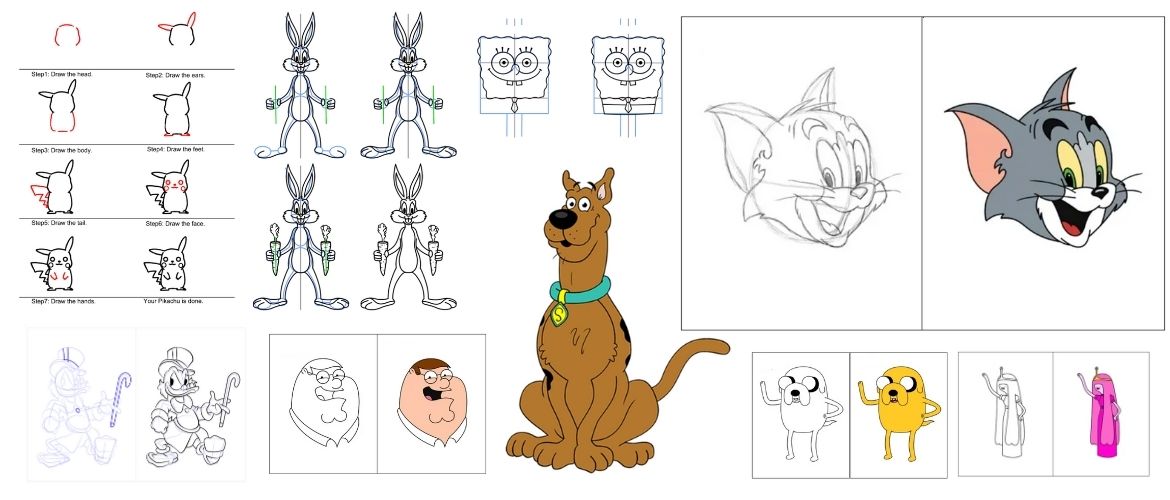
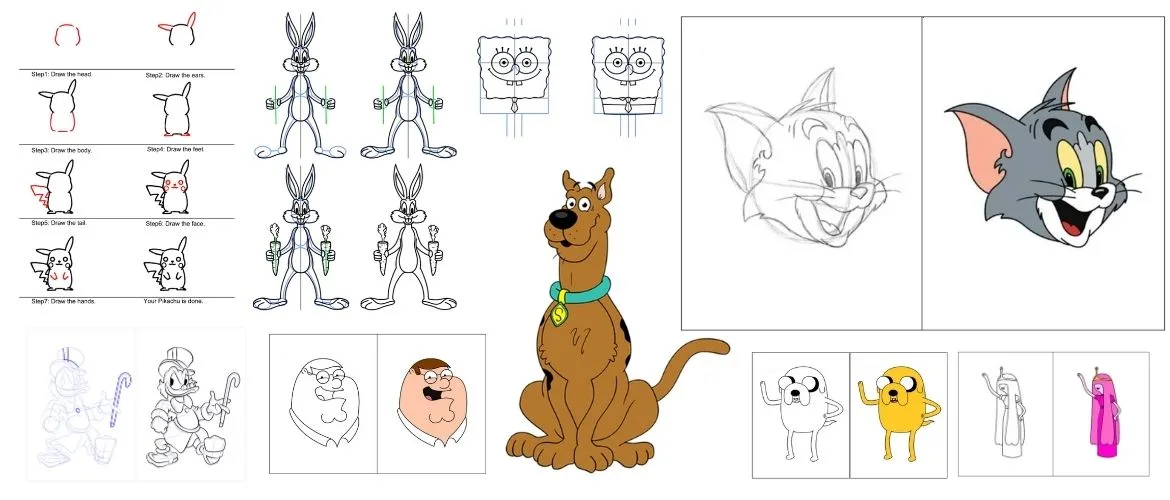
Some of my fondest memories were watching Saturday morning cartoons and cartoons every other day for that matter. It’s fun to show your love for those characters and drawing them is one way to do it. In fact, there are a lot of easy cartoon characters to draw!
There are thousands of cartoon characters that you can practice on before proceeding on to making your characters.
They help you learn the different techniques you need to know in order to start your own line.
Let’s get started on drawing your favorite toons and step-by-step instructions on how to draw cartoon characters.
Essential Materials
| Tool | Why It Matters | Beginner Tips |
|---|---|---|
| Sketch Paper or Mixed‑Media Pad | Smooth 70–90 lb (105–147 gsm) paper lets graphite or ink glide without feathering. | Start with loose sheets for easy scanning; upgrade to a bound sketchbook once you’re drawing daily. |
| Pencils (HB & 2B) | HB for light construction lines; 2B for darker outlines and shading. | Keep them sharp for clean curves—use a handheld sharpener, not the electric kind that eats leads. |
| Black Fineliner Pens (0.3 mm & 0.5 mm) | Bold, smudge‑free ink makes your final cartoon pop. | Test on scrap to ensure no bleed‑through; work left‑to‑right if you’re right‑handed to avoid smears. |
| Plastic Eraser & Kneaded Eraser | Plastic erasers lift graphite cleanly; kneaded erasers dab away stray marks without tearing paper. | Shape the kneaded eraser into a point to pick out tiny highlights (e.g., eye glints). |
| Optional Color Medium | Colored pencils or alcohol markers add instant appeal. | Limit yourself to 3–5 hues per character to keep palettes harmonious and fast. |
| Digital Tablet & Stylus (Optional) | Layers, undo, and quick color fills streamline practice. | Free apps like Autodesk SketchBook or Medibang Paint give you pro tools without the price tag. |
Pro Tip: Gather everything in a small tote or pencil case so you’re ready for a quick 10‑minute doodle session anytime inspiration strikes.
Cartoon Drawing Basics Refresher
1. Start with Simple Shapes
- Break every character into circles, ovals, rectangles, and triangles.
- Keep each shape loose and light—these are just “training wheels” for your final lines.
2. Exaggerate to Communicate
- Push proportions: large heads make characters cuter; long limbs add whimsy.
- Emphasize one defining feature (e.g., huge eyes on a penguin) so the design reads at a glance.
3. Draw with Confident Lines
- Use your shoulder, not just your wrist, for smoother curves.
- Lay down the line once; if it’s off, erase and redo rather than sketching fuzzy “chicken scratches.”
4. Maintain Basic Symmetry
- Lightly draw a vertical center line and a horizontal eye‑line on heads to align features.
- Flip your paper or canvas horizontally (or hold it up to a mirror) to spot—and fix—wonky proportions.
5. Layer Your Construction
- Gesture / Stick Figure: Establish pose and motion in under 10 seconds.
- Basic Shapes: Flesh out body parts with cylinders, blocks, and spheres.
- Details: Add facial features, clothing folds, and accessories.
- Clean Line Art: Ink over the best lines; erase construction beneath.
- Optional Color & Shading: Apply flat colors first, then simple shadows and highlights.
Quick Drill: Set a timer for 3 minutes and redraw a favorite character using only geometric shapes. Repeat daily to train your eye to simplify.
Choosing Beginner‑Friendly Characters
What Makes a Cartoon “Easy”?
- Few Basic Shapes: Look for designs built from circles, ovals, and rectangles—no tricky perspective blocks.
- Low Line Count: Under 20 decisive strokes keeps the drawing quick and forgiving.
- Strong Silhouette: A character you can recognize in solid black (e.g., big‑headed cat, stubby‑armed alien) reads well even if details wobble.
- Repeating Features: Symmetrical eyes or mirrored limbs let you practice the same element twice, reinforcing muscle memory.
Fast Ways to Pick the Right Reference
- Thumbnail Test: Shrink a candidate image to 1‑inch tall. If you still know what it is, the shapes are simple enough.
- Shape Overlay: Drop the picture into a drawing app (or print it) and trace basic circles and rectangles on top. Fewer than six major shapes? Perfect for beginners.
- Detail Audit: Count unique textures (scales, fur clumps). One or fewer = beginner‑friendly.
Great Starter Categories
| Category | Why It’s Beginner‑Friendly | Example Prompts |
|---|---|---|
| Round Animals | Circular bodies + dots for eyes = instant cuteness. | Chubby penguin, sleepy panda, baby chick |
| Stick‑Figure Variations | Emphasizes pose and emotion over detail. | Hero pose, dancer, skateboarder |
| Simple Food with Faces | Combines objects you already know with minimal cartoon features. | Smiling donut, winking pizza slice |
| Mini Aliens & Monsters | No anatomy rules—mistakes read as charm. | One‑eyed blob, fuzzy triangle critter |
| Classic Emoji Heads | Universal expressions teach you mouth/eye shortcuts. | Laugh‑cry face, surprised face |
Tip for Originality: Once you choose a base (say, a round cat), tweak one element—add star‑shaped pupils or a tiny cape—to make it yours without increasing complexity.
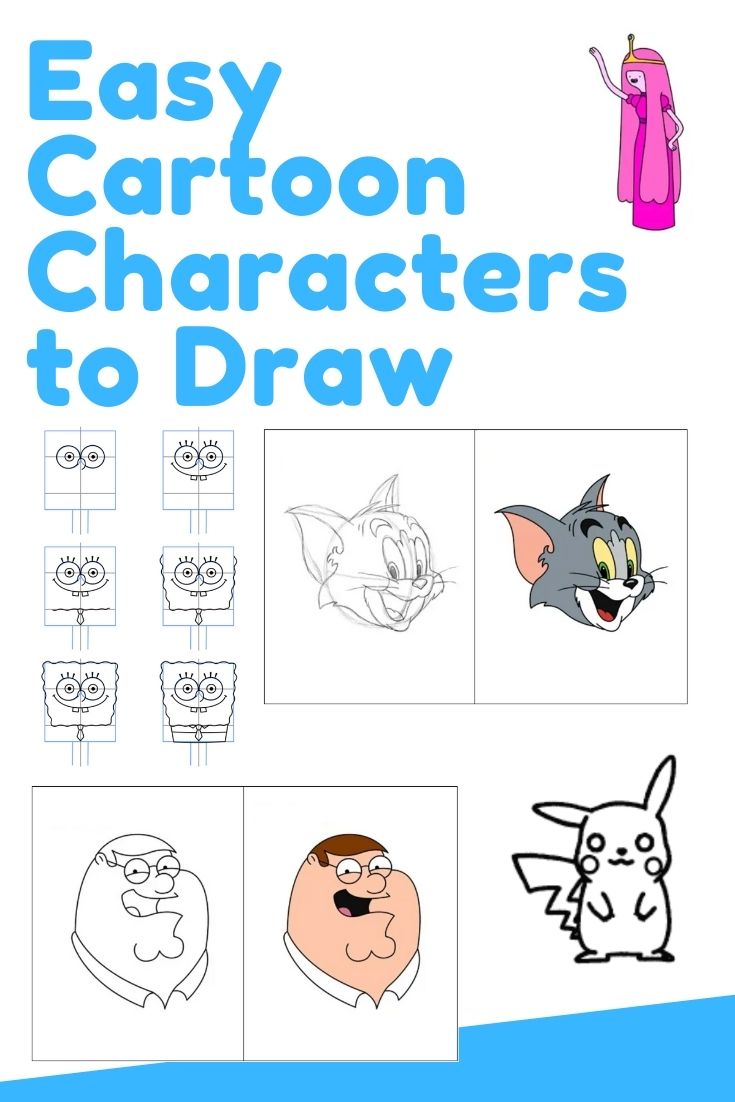
01. Bugs Bunny
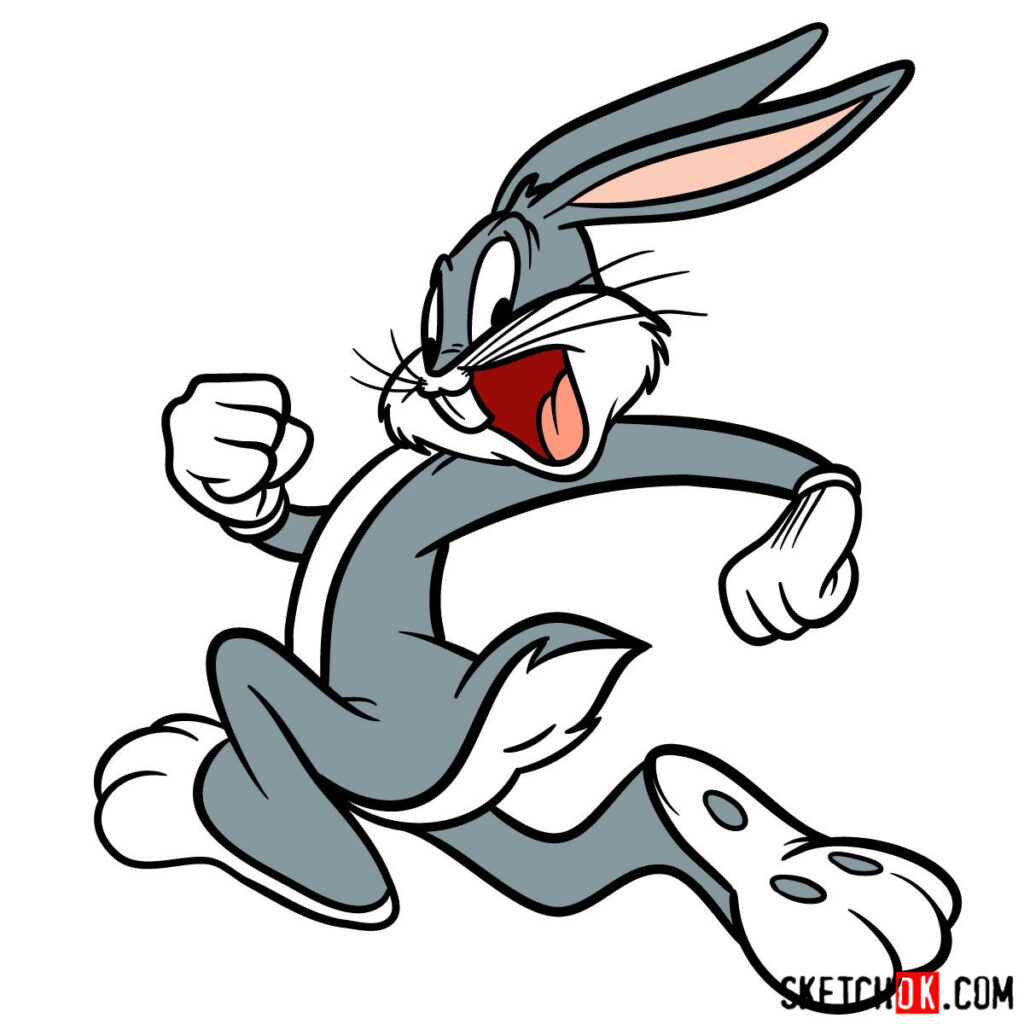
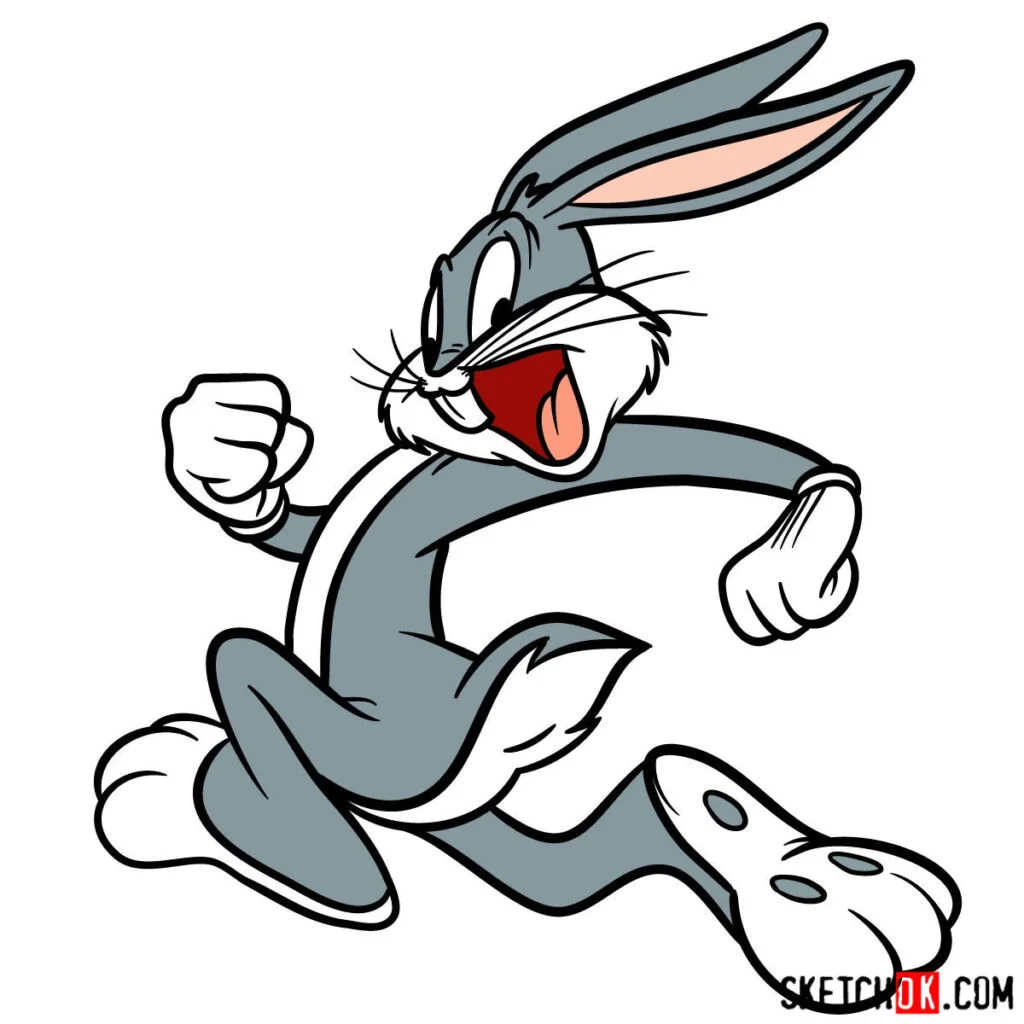
Bugs Bunny is a character famous among everyone and an easy cartoon character to draw for all ages.
Not only just you, but your grandma is well aware of who bugs bunny is as well.
The kids these days are fascinated by the man like a bunny as well.
When you are beginning to learn to draw cartoon characters, Bugs Bunny is a good start.
His physique is a lot like a man instead of being too much like a bunny.
You can learn it by just looking at a picture or by following a tutorial.
He is going to be a good addition to your portfolio.
Step by Step Instructions: SketchOK
Read Also:
02. Spongebob Squarepants
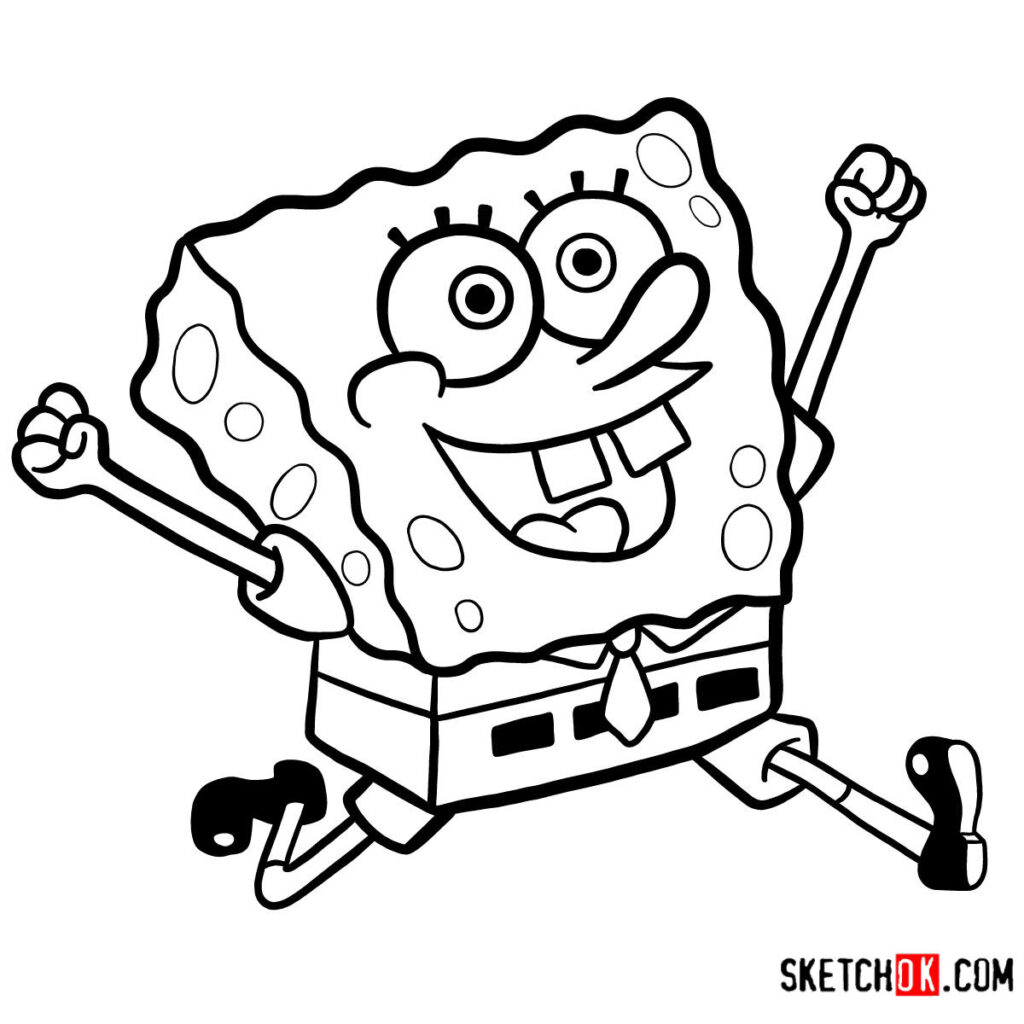
SpongeBob SquarePants, a character that lived underwater and brought a smile to everyone, is a beloved TV character and a season.
He is just a square sponge with some holes in him.
His dress is very easy to draw as well as it doesn’t matter where it starts and where it ends.
After all, he is just a square.
You can add colors to him or just draw a sketch.
Since there aren’t many poses, you can try changing his facial expressions instead to get creative with him.
Step by Step Instructions: SketchOK
03. Patrick Star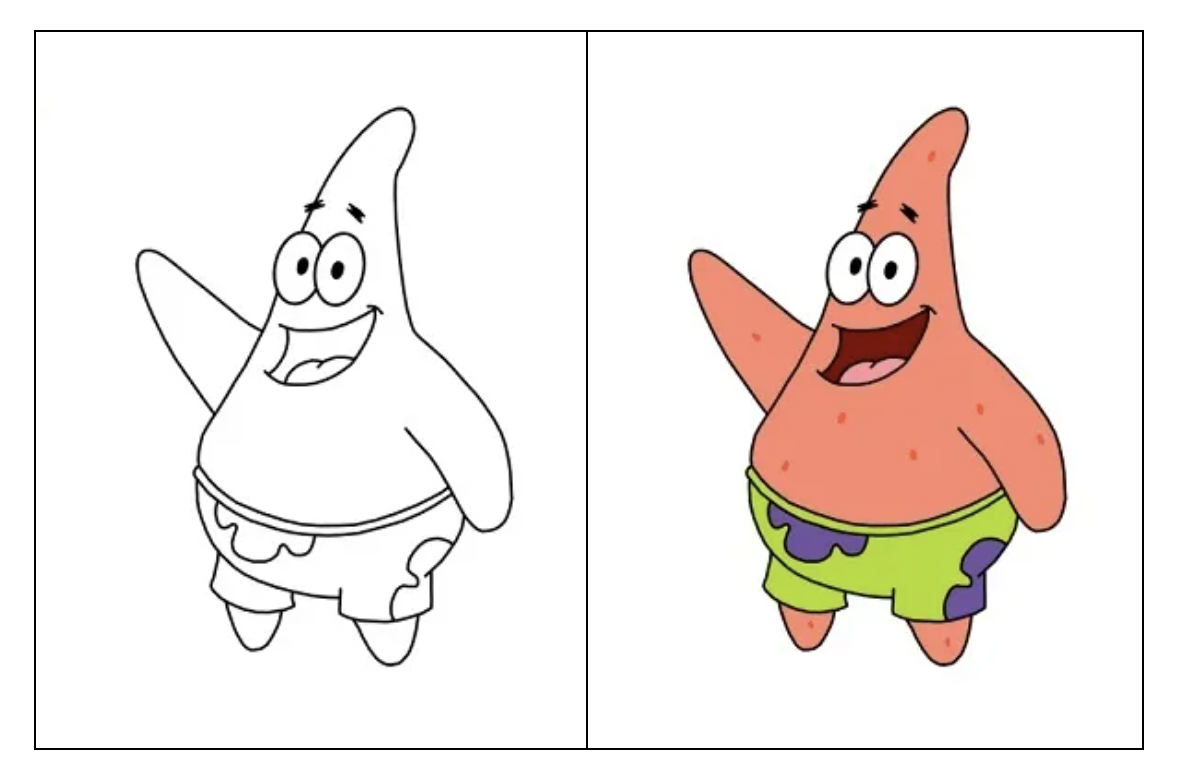
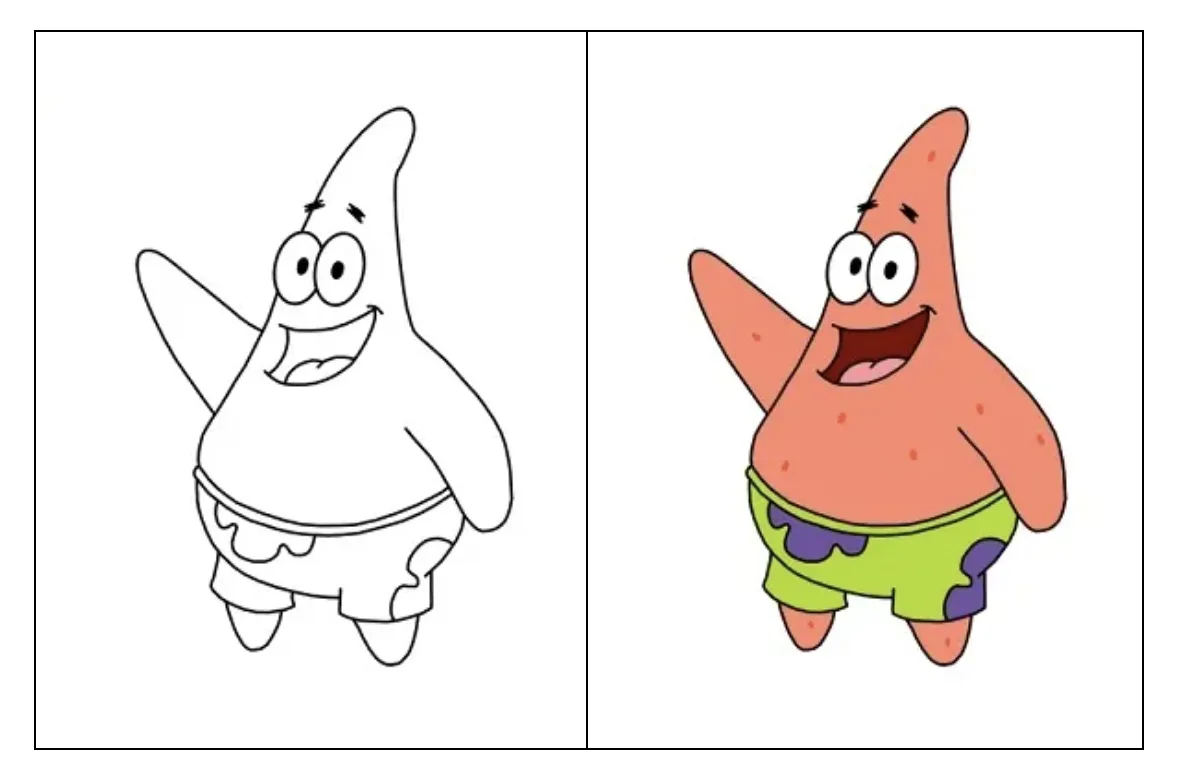
Patrick Star is the best friend of SpongeBob SquarePants.
He is shaped like a star as the animators were trying to achieve a starfish.
His facial features are easy to draw as well, and since he only wears the same boxers, his clothes are not going to be a problem either.
You can draw Patrick Star and Spongebob together in different frames and create different images.
A tutorial isn’t mostly required to draw Patrick Star, but you will find plenty of them online if you need one.
Step by Step Instructions: Easy Drawing Tutorials
04. Rick Sanchez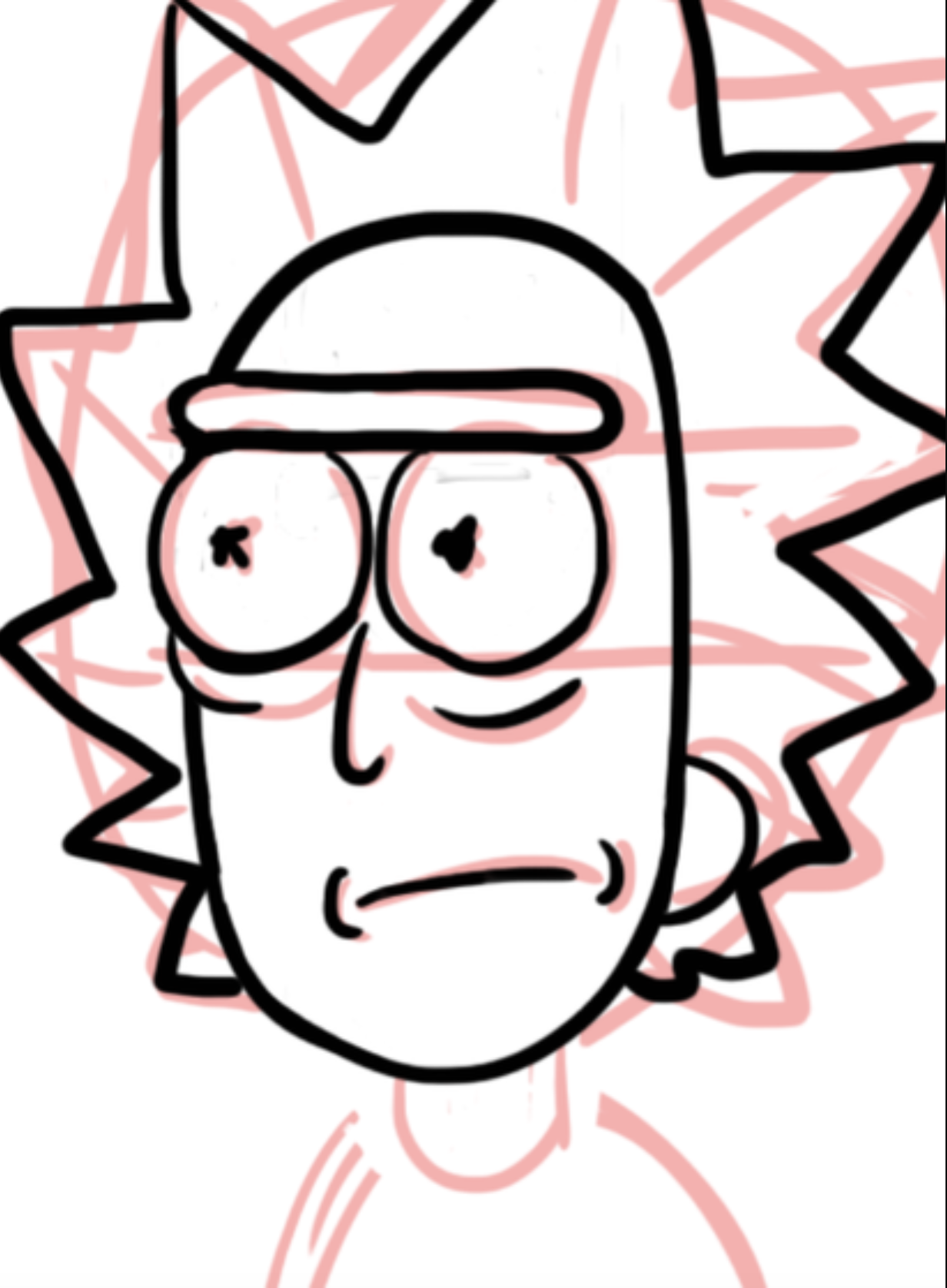
Rick Sanchez is not as historic as Spongebob and Bugs Bunny, but he is getting very famous among the youngsters.
He is a crazy goofy scientist who goes on adventures with his grandson, Morty Smith, and keeps finding himself in new situations.
His face doesn’t have a lot of typicalities, but he is very expressive through his face.
With sparky hair and the uni-brow, his face is very distinguishable.
His clothes are easy to draw, as well. He wears the same lab coat over his blue shirt and has his hair kept the same way as well.
You can also change the hairstyle a bit and call him a Rick Sanchez from some other reality to get creative.
Step by Step Instructions: WikiHow
05. Morty Smith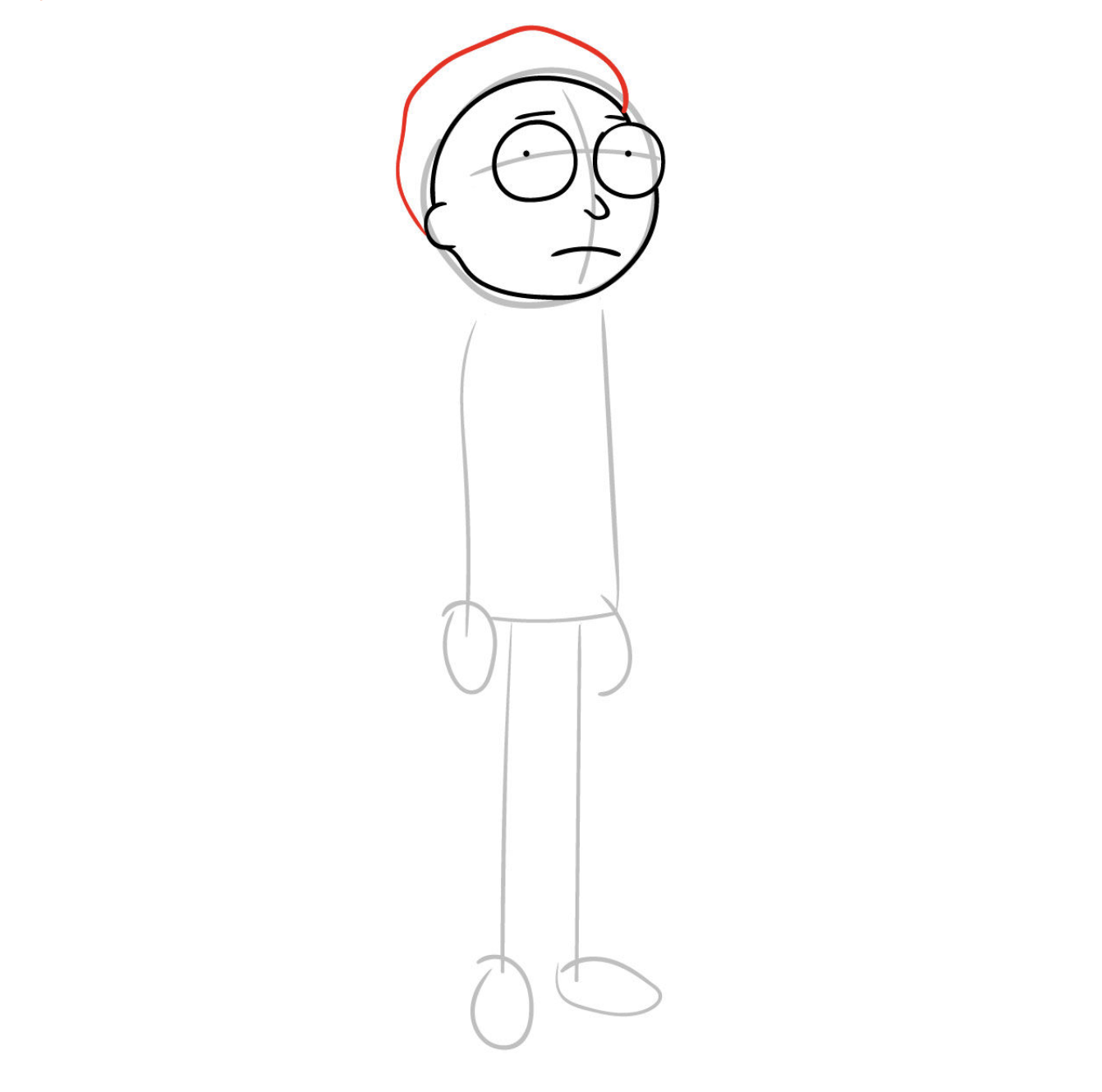
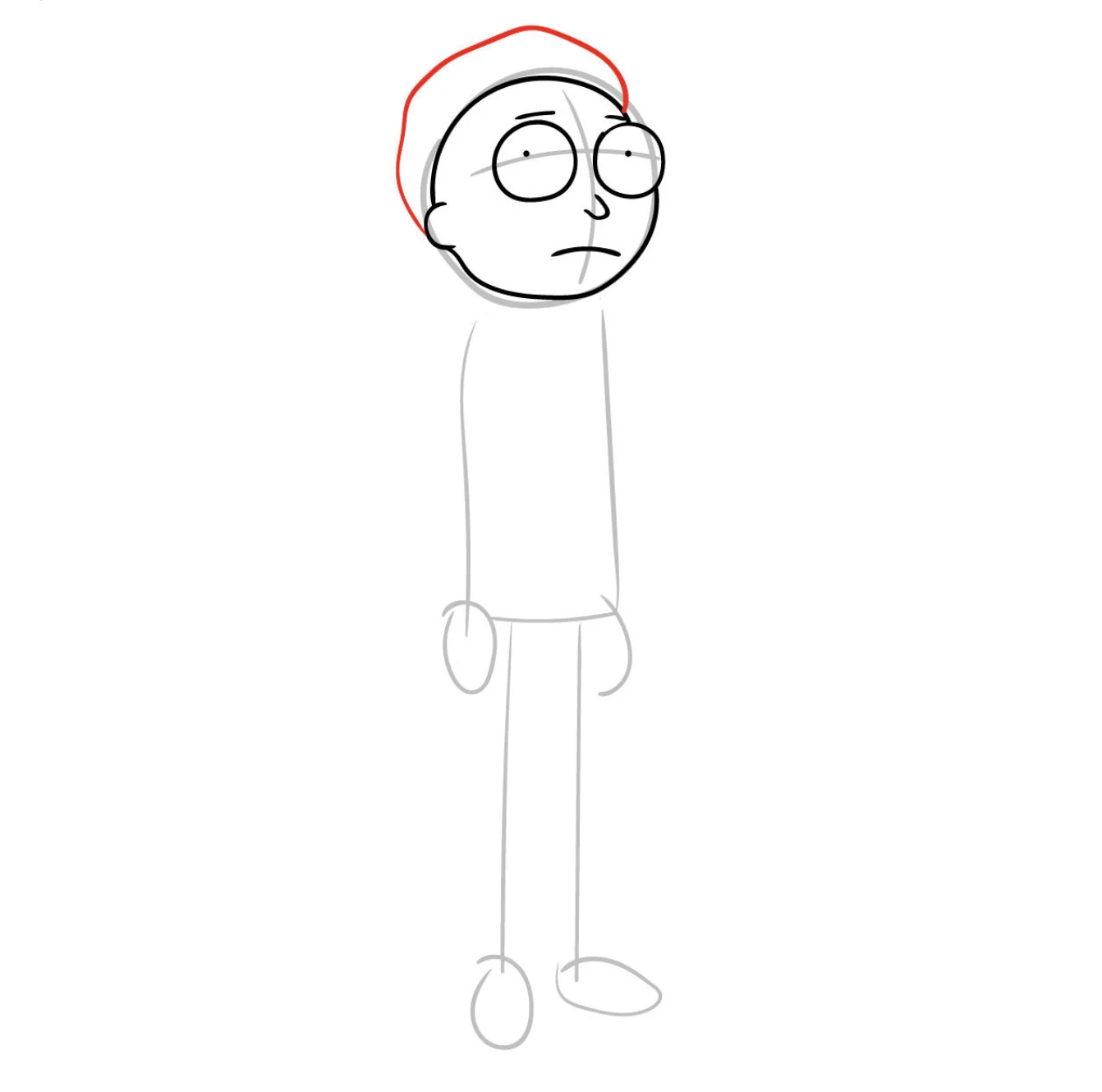
Morty Smith has a less expressive face and can be drawn better.
His hairline is easier as well, and instead of having any lab coat or anything, he only goes around in a yellow shirt with blue pants.
His body structure isn’t complicated as well, and you can draw both Rick Sanchez and Morty Smith together in a frame.
They have many goofy moments, so you can pick any of them to draw them in that situation.
Step by Step Instructions: Sketchok
For more cartoon character fun, check out my easy cartoon characters to paint!
06. Jake the Dog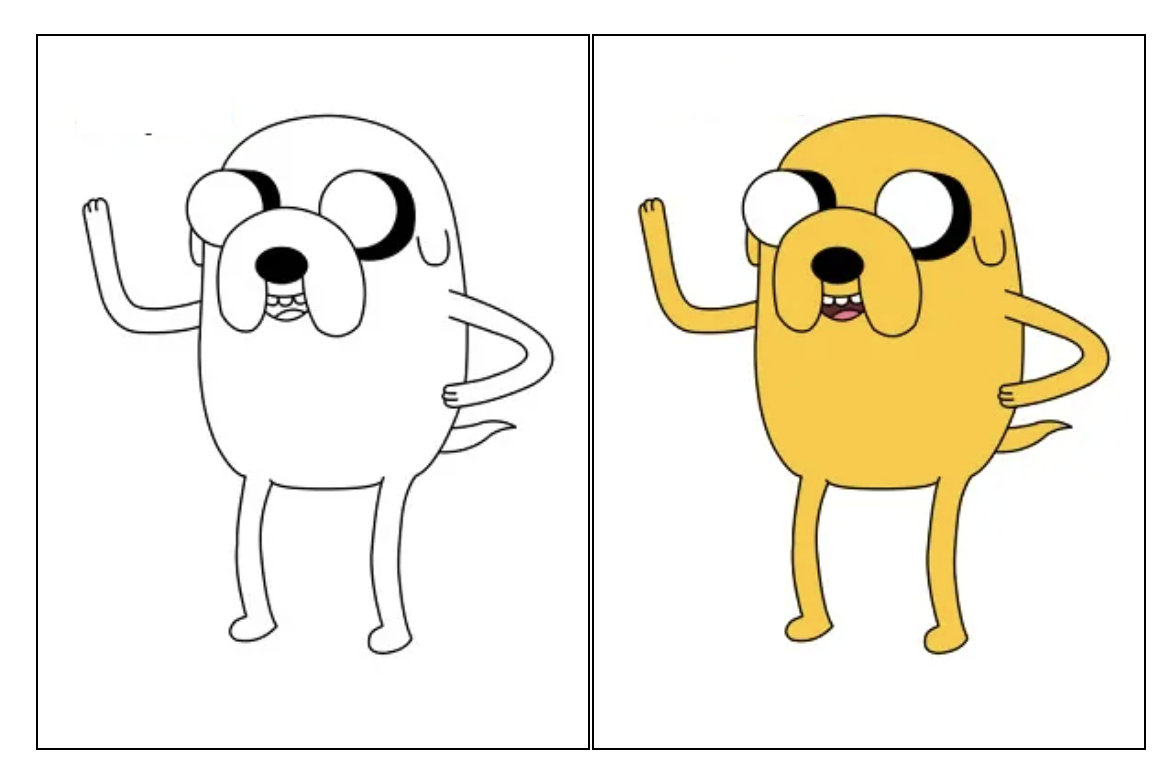
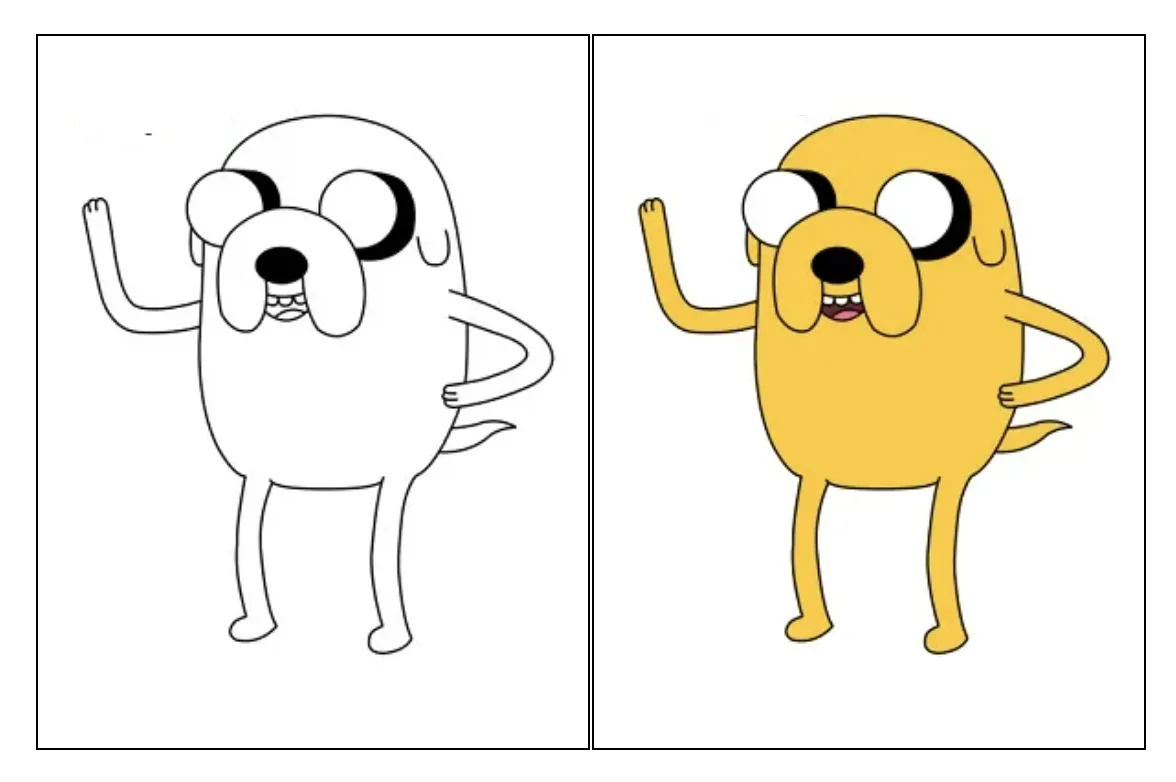
Jake, the dog, is a famous character from adventure times.
His body is just an oval with strings attached to it as his limbs.
Thanks to his stretchable body, you draw him in other shapes as well, and as long as the face is captured right, the picture will make complete sense to all the viewers.
Step by Step Instructions: Easy Drawing Tutorials
07. Princess Bubblegum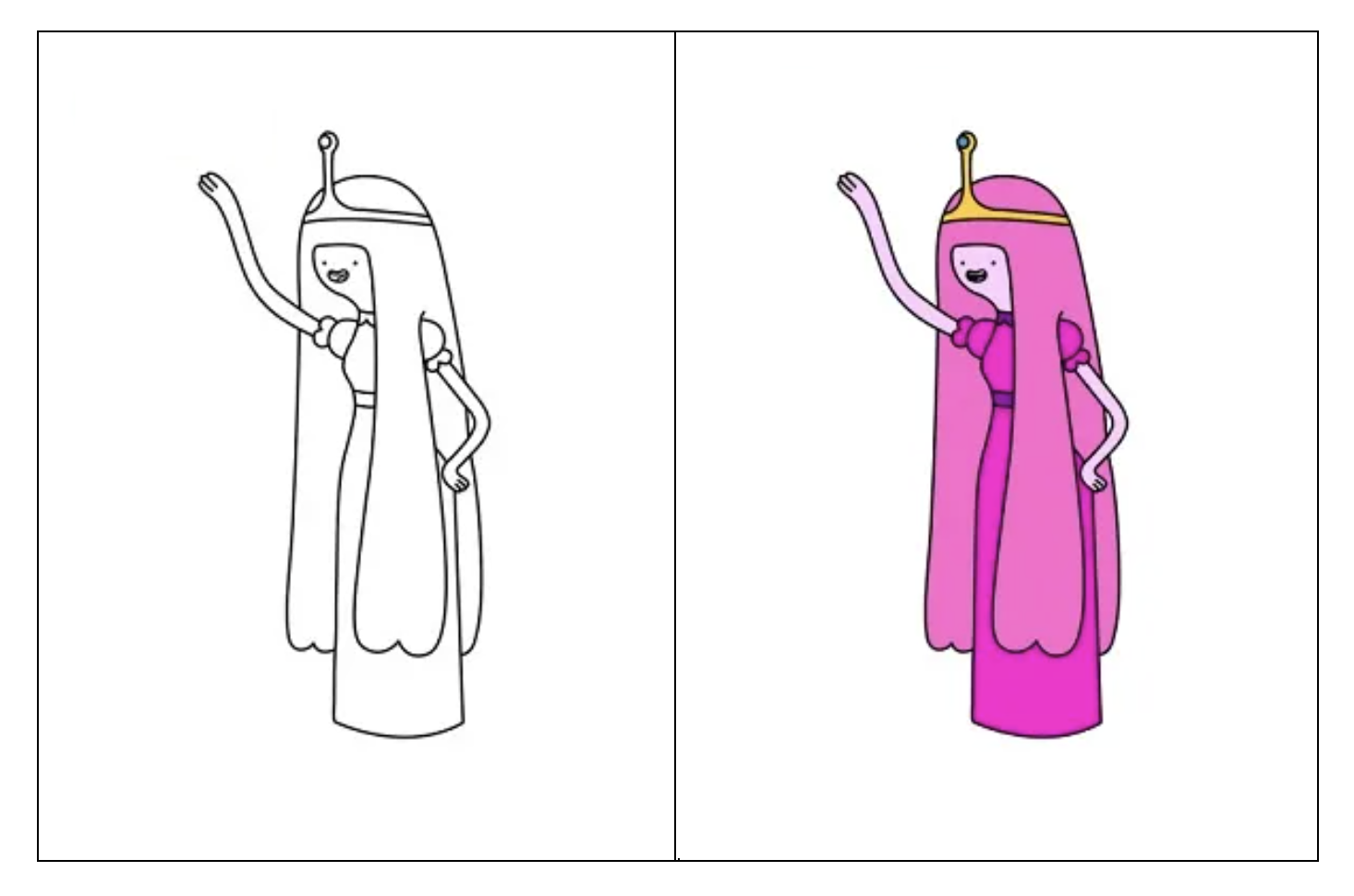
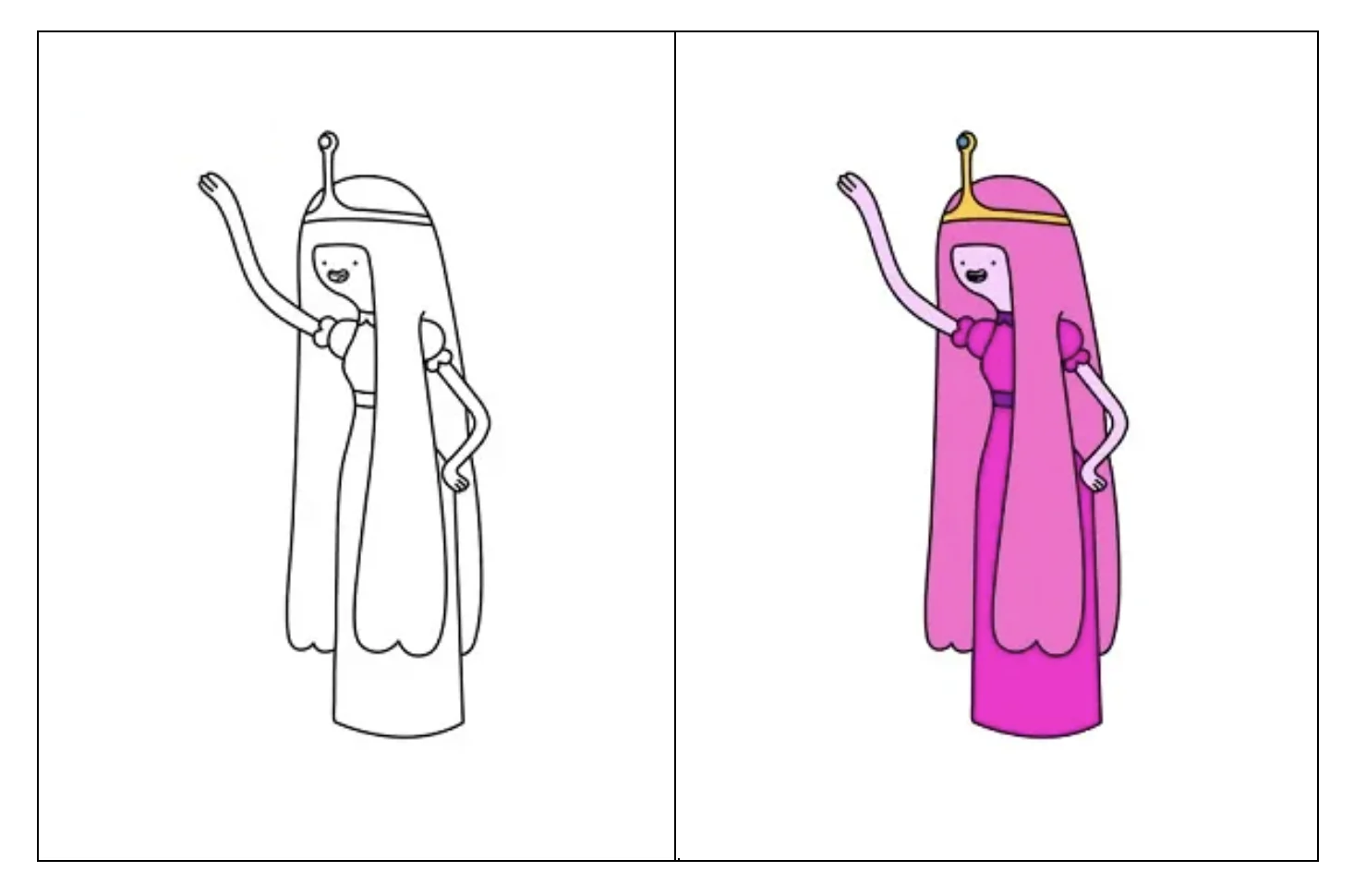
She has the easiest face to draw along with a very simple body.
As she changes her dresses quite frequently in the different episodes of the show, you can practice on her in different poses or different dresses as well.
Just draw a face design, two dots for eyes, and a line for lips.
It does not get any easier than this.
Step by Step Instructions: Easy Drawing Tutorials
08. Scooby-Doo
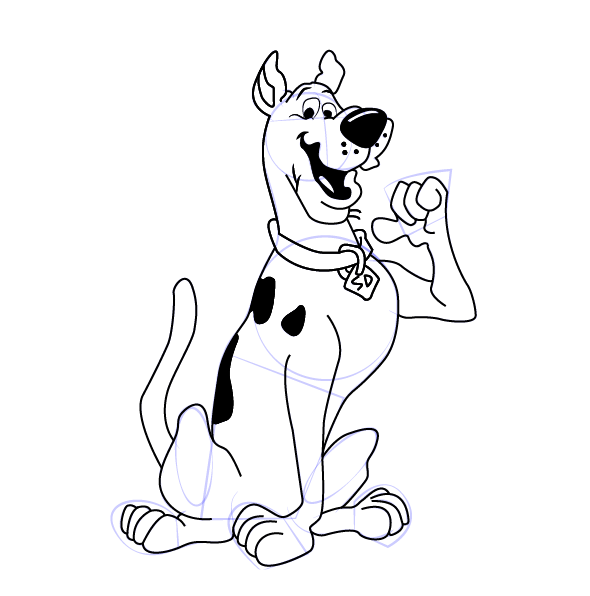
Scooby-Doo is one of the famous cartoon characters of all time.
You can practice drawing a Scooby-Doo in different poses.
Whether it is sitting down, standing, or looking straight forward, you can easily draw this character.
The structure of the character is simple. You just need to draw some circles arranged in different frameworks and here you go.
While drawing a Scooby-Doo, you will find many similarities between a Scooby-Doo and a real-world dog.
So, start drawing a Scooby-Doo and have fun with it!
Step by Step Instructions: Drawing Tutorials
09. Catdog
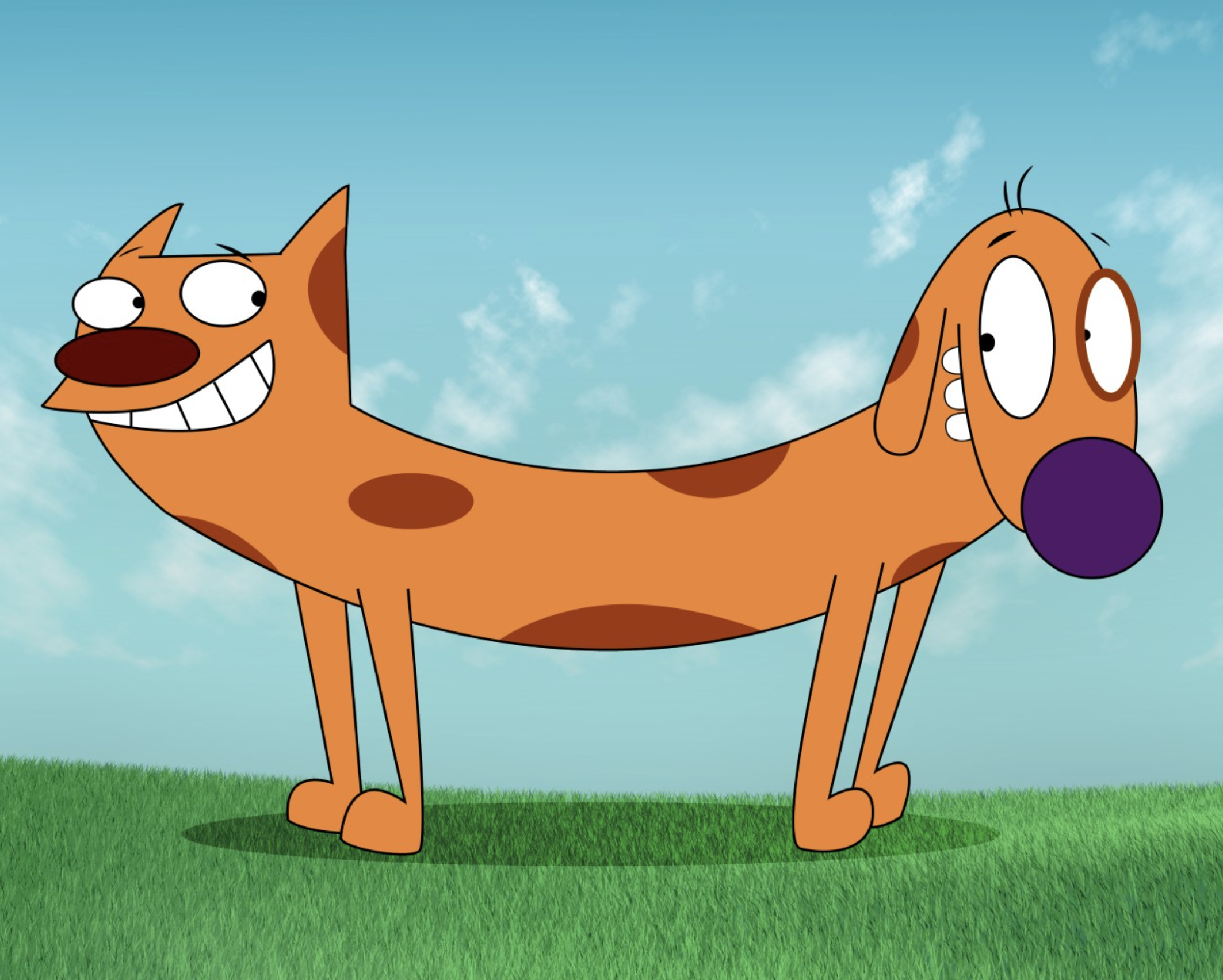
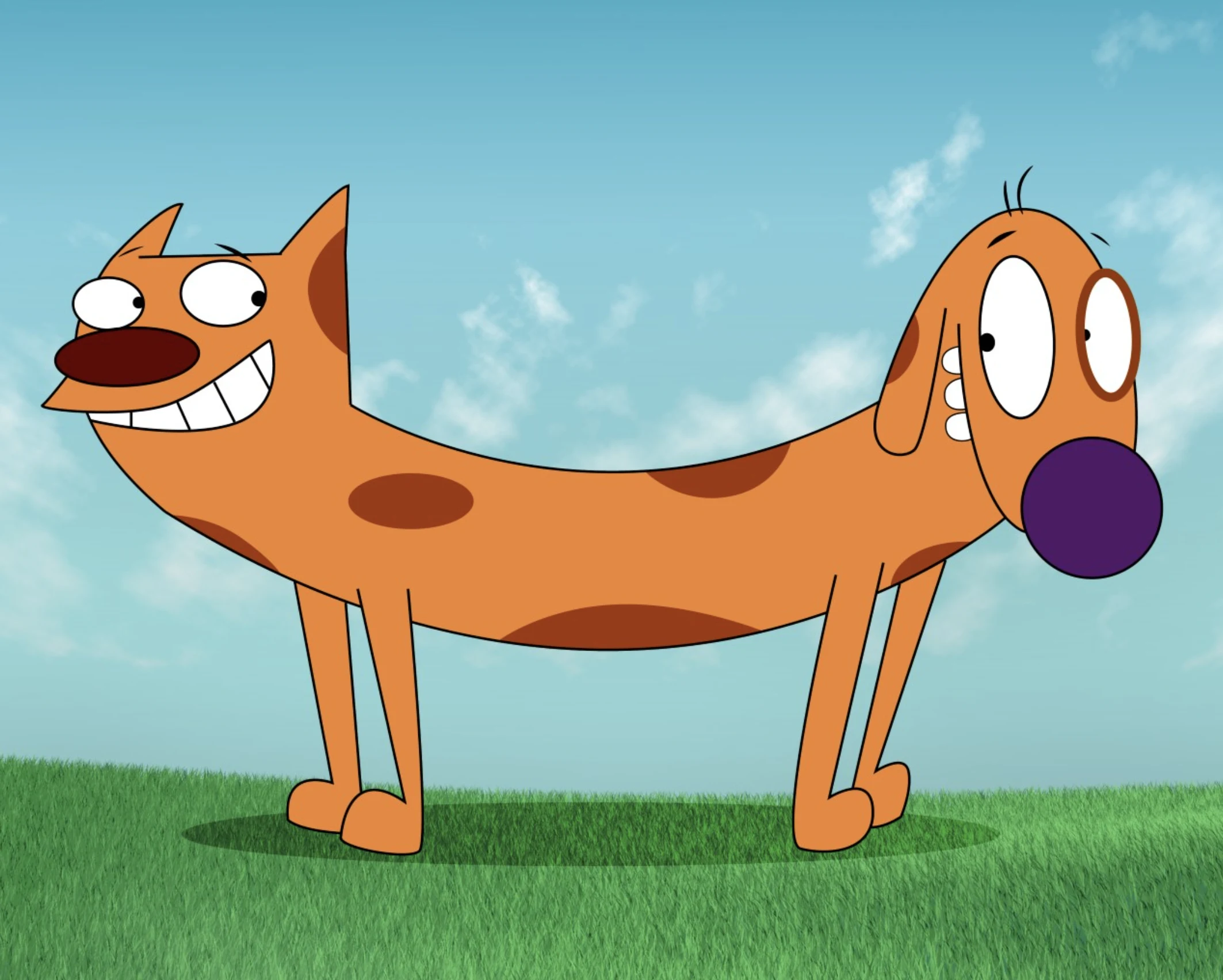
Catdog is a very different cartoon, just a long body with 2 faces at each end of the body.
Their faces are easy to draw, and since they wear no clothes, that’s not going to be a problem.
You can watch a tutorial on how to draw a Catdog properly instead of doing it all on your own.
You can make the body shape straight, curved, or even round, and as long as there are two heads at the end of it, your drawing is going accurately.
Step by Step Instructions: Draw Central
10. Tom and Jerry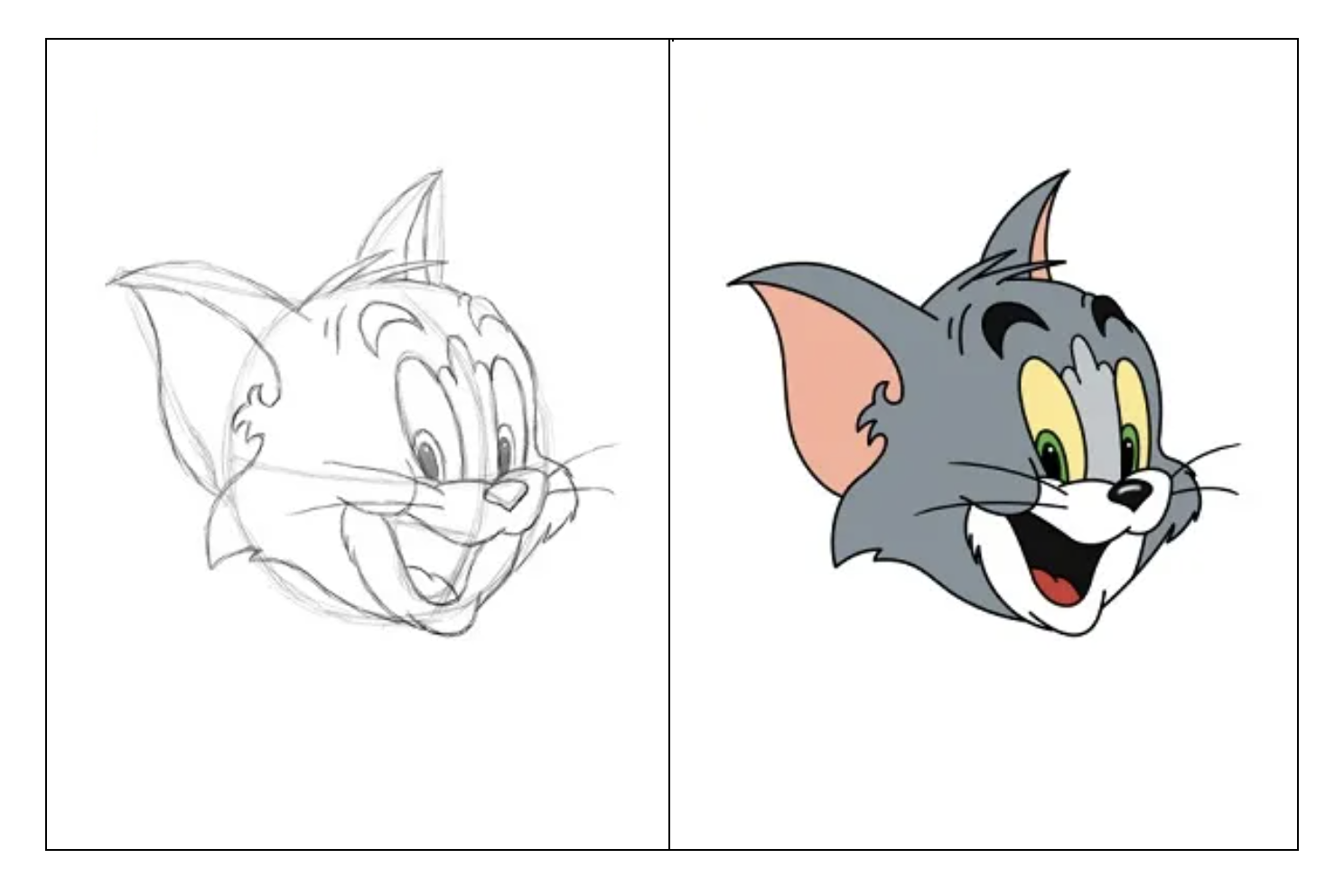
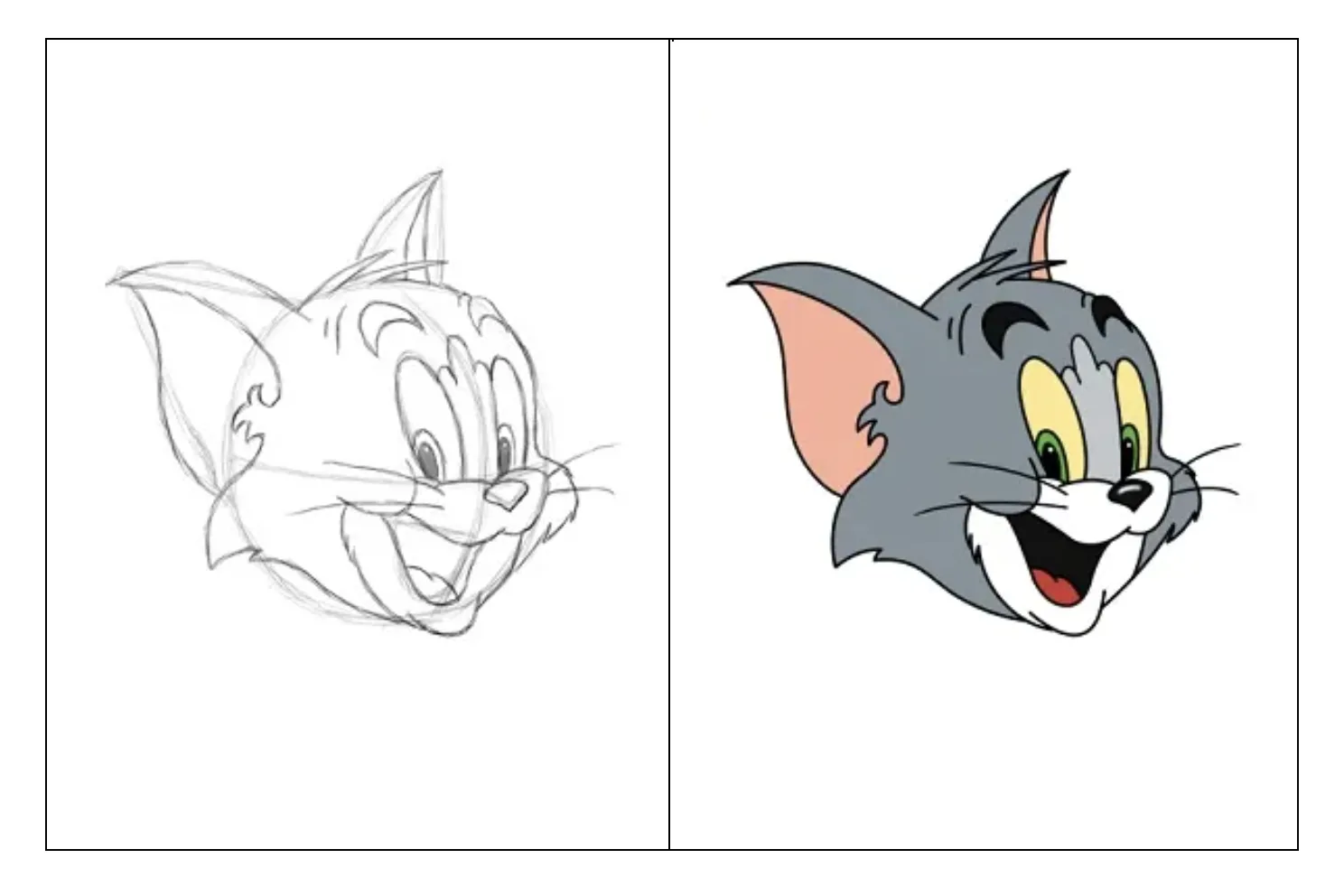
When talking about cartoon characters, Tom and Jerry are two legends that can never be left out.
As they have always aired on the TV together, it is only fair to them to mention them in the same section.
Beginners might not be able to get all the details right in the beginning, so it is preferred to watch a tutorial on them.
They are a great addition to your portfolio, and as everyone is aware of who Tom and Jerry are, you won’t have to try to keep explaining why your sketch looks the way it does.
They have entertained everyone for a long time, so you can just pick any of their poses that you think will work the best.
Whether Jerry is stealing some cheese while Tom is sleeping in the background or Tom chasing Jerry, all kinds of drawings are considered legendary.
Step by Step Instructions: Easy Drawing Tutorials
11. Shaggy Rogers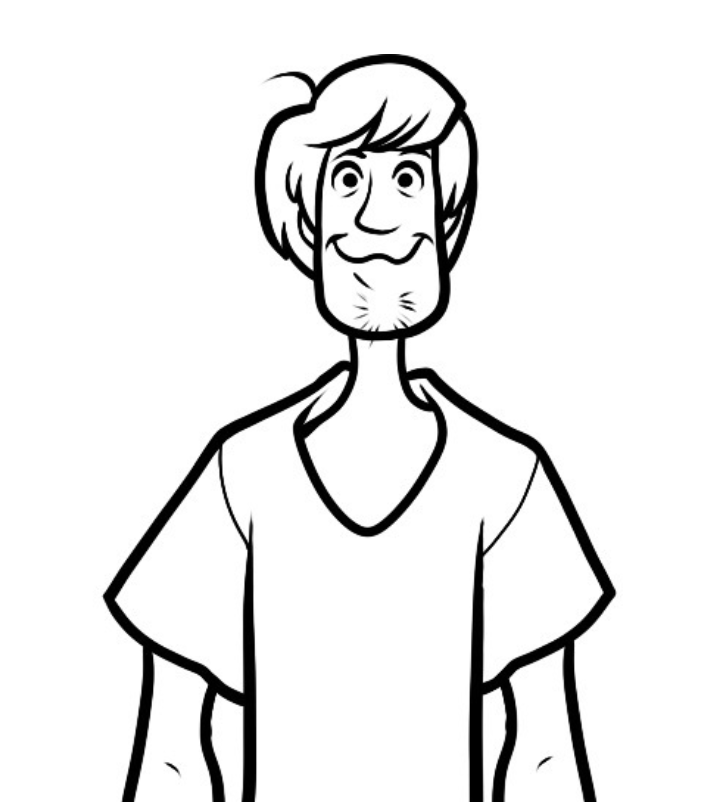
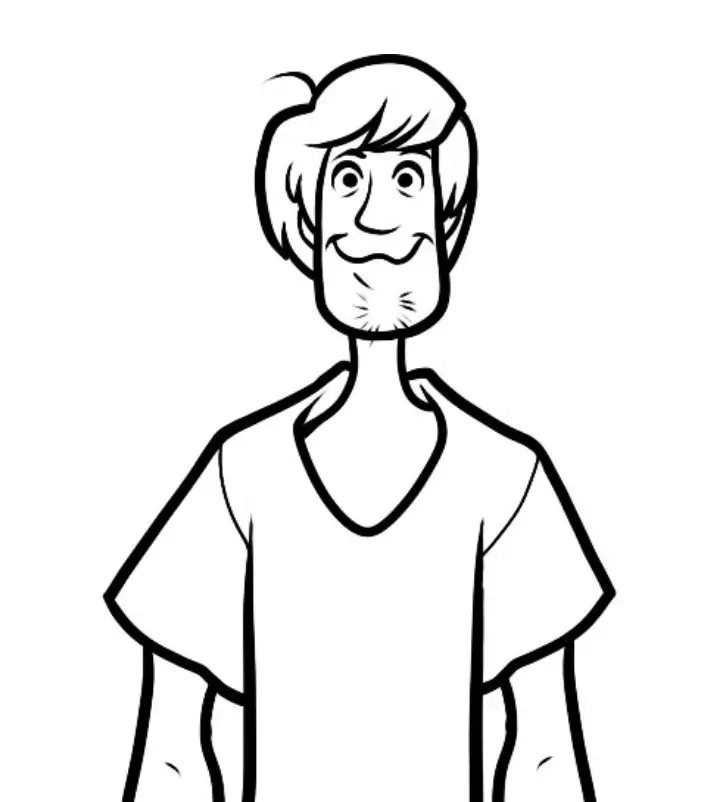
Do you want to try drawing Shaggy Rogers?
Shaggy Rogers is another fictional character who is not only cowardly but has a deep friendship with another cartoon character and that is Scooby-Doo. Yeah, it is right!
He is the best friend of Scooby-Doo. As Scooby-Doo is less interested in solving the mysteries, similarly, Shaggy Rogers likes to eat food instead of mystery-solving.
With plain yellow short and blonde hair, this slim guy is very easy to draw.
With a few shapes and lines, you can easily draw this character.
Step by Step Instructions: DragoArt
12. Courage the Cowardly Dog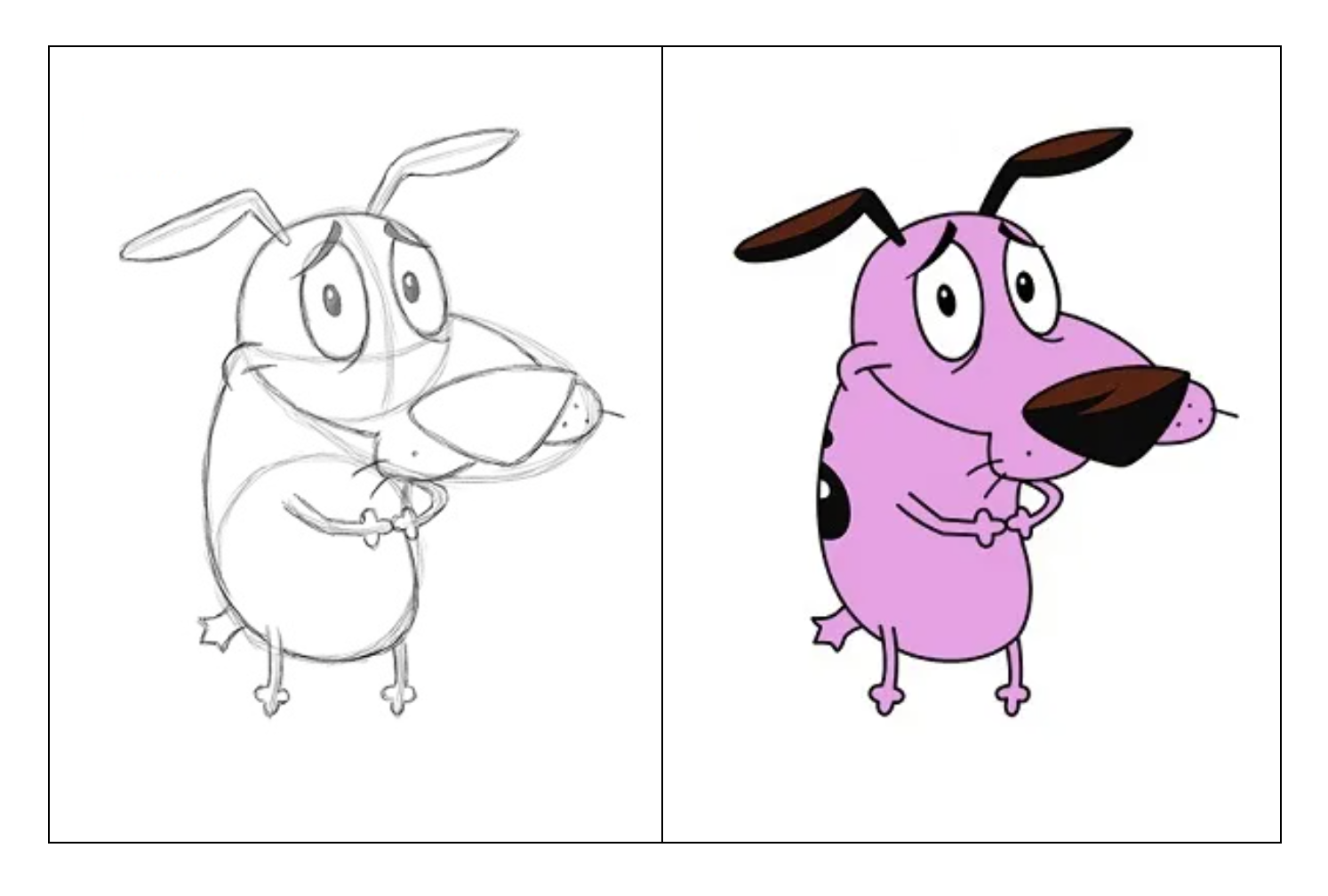
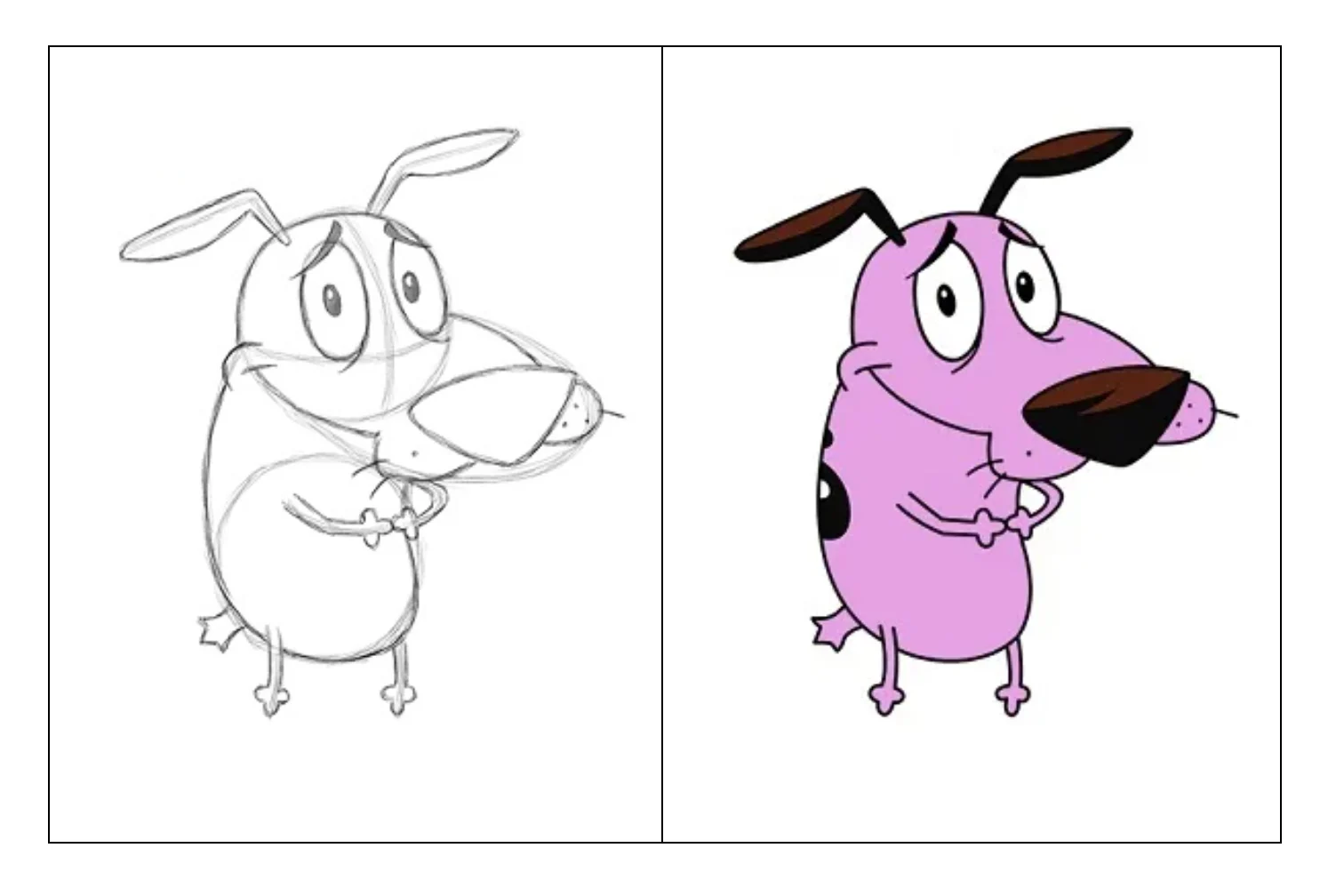
Courage always had a lot of emotions on his face, fear, anger, and sometimes pity for himself.
While it is important to capture his expressions and emotions, his body structure is still simple to draw.
The small teeth, the large eyes, and the antenna-like ears can be drawn on the paper without having to follow a tutorial.
But if you still need one, you can probably find them on YouTube or some other platform.
Step by Step Instructions: Easy Drawing Tutorials
13. Peter Griffin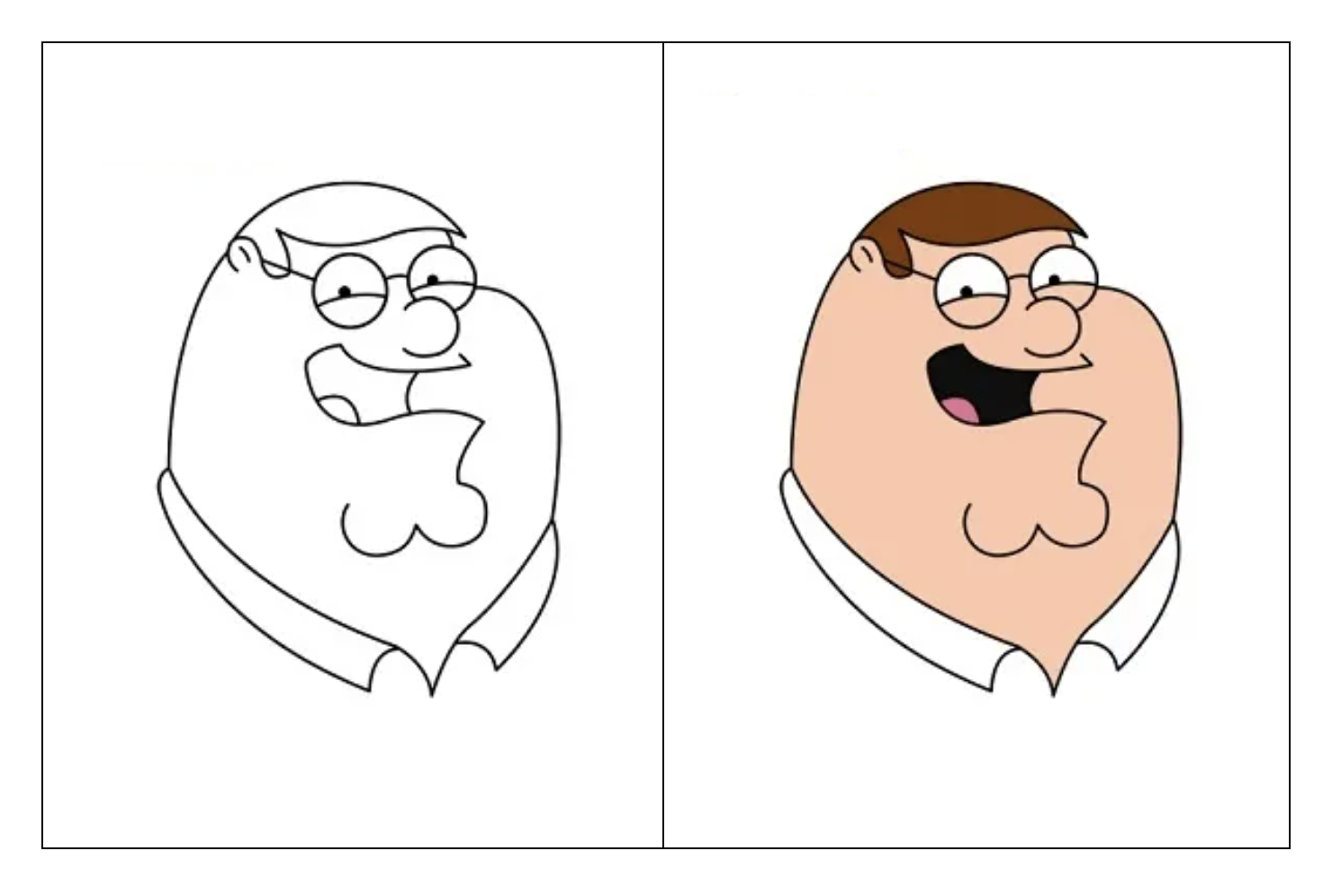
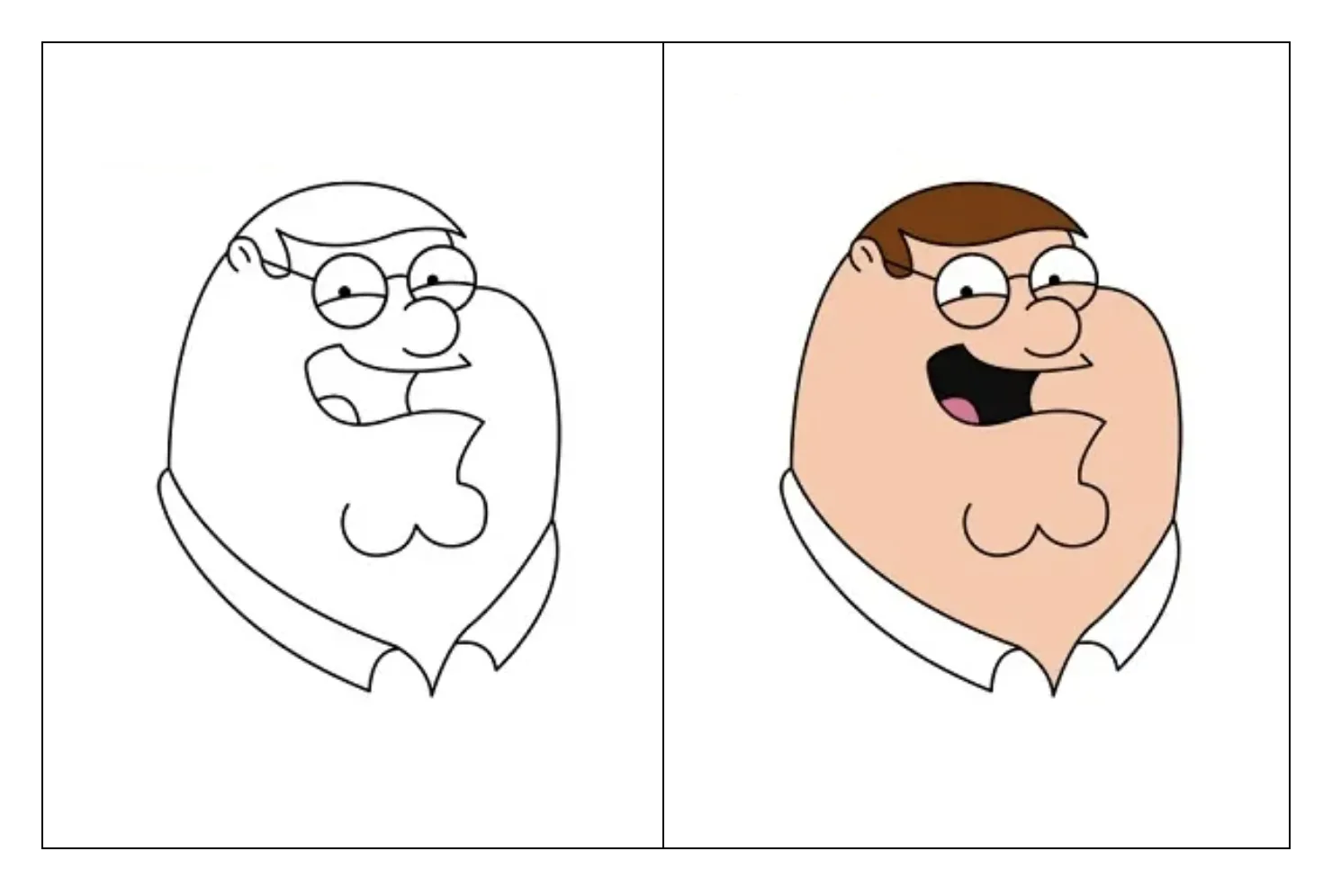
The show started in 1999 and has been entertaining everyone since.
With 19+ seasons, Peter Griffin’s animators have improved him a lot while he is still the goofy fella.
He has a heavy physique and very simple features.
While drawing Peter Griffin, you will need to be careful about his glasses as they are also his eyes and need to present the look of both.
Other than that, all of his expressions can be captured easily.
Step by Step Instructions: Easy Drawing Tutorials
14. Pikachu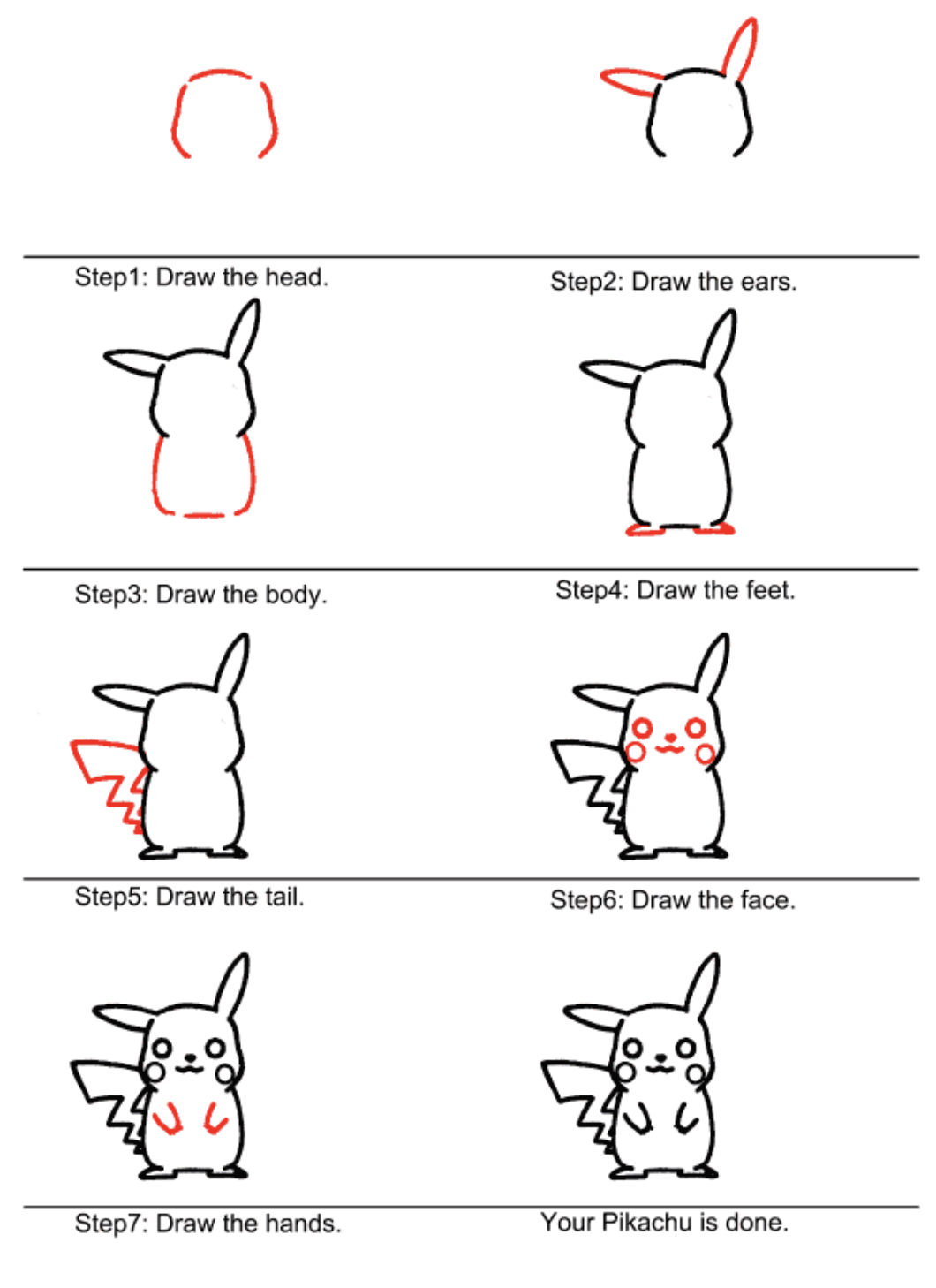
Pikachu is a very famous character from the Pokemon cartoon.
The character took hype again when the creators launched their game to capture all the Pokemon.
He is a simple character to draw, just add the yellow color, the red cheeks, and some little details on his body, and you will have the perfect drawing.
Step by Step Instructions: We Draw Animals
15. Roger the Alien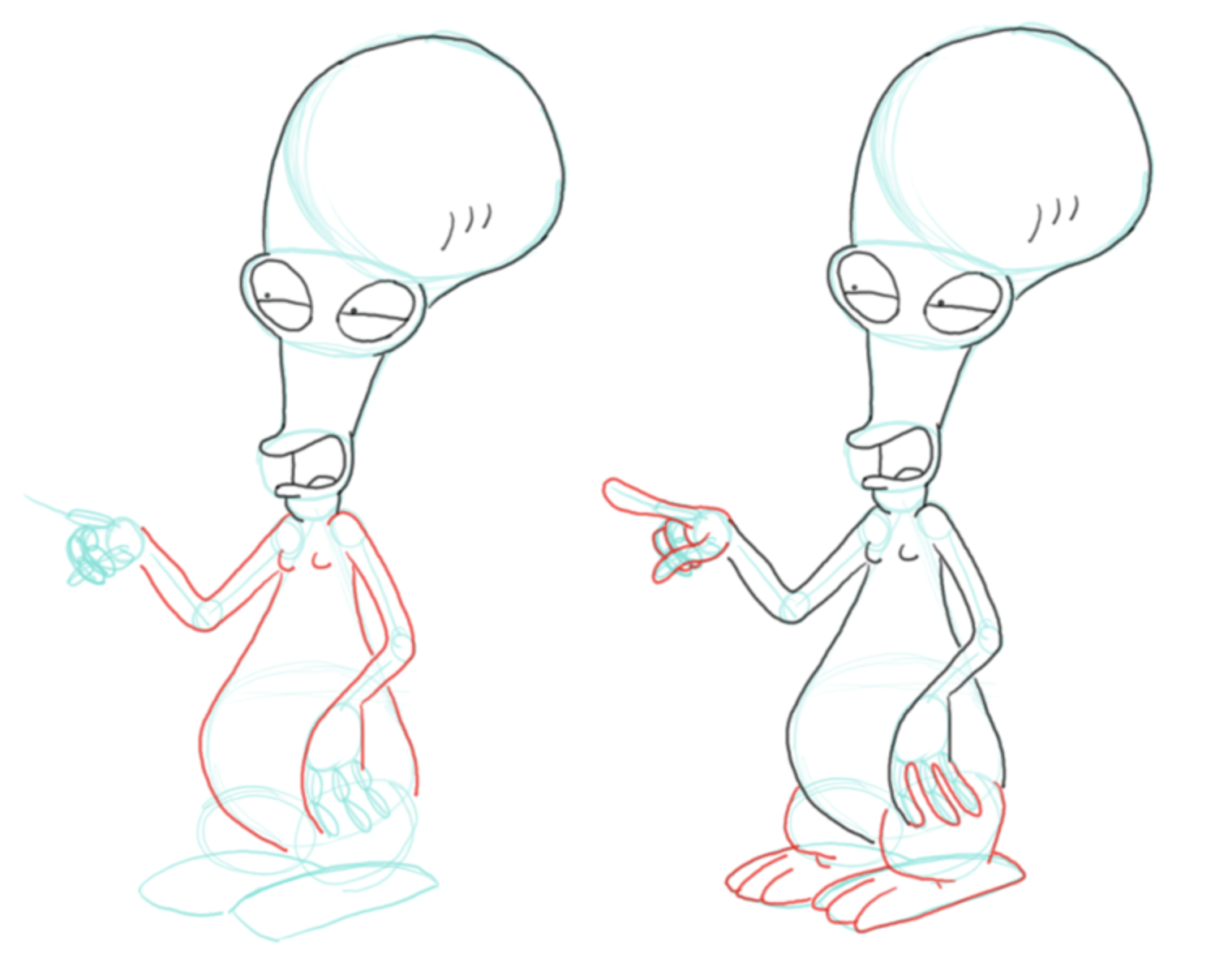
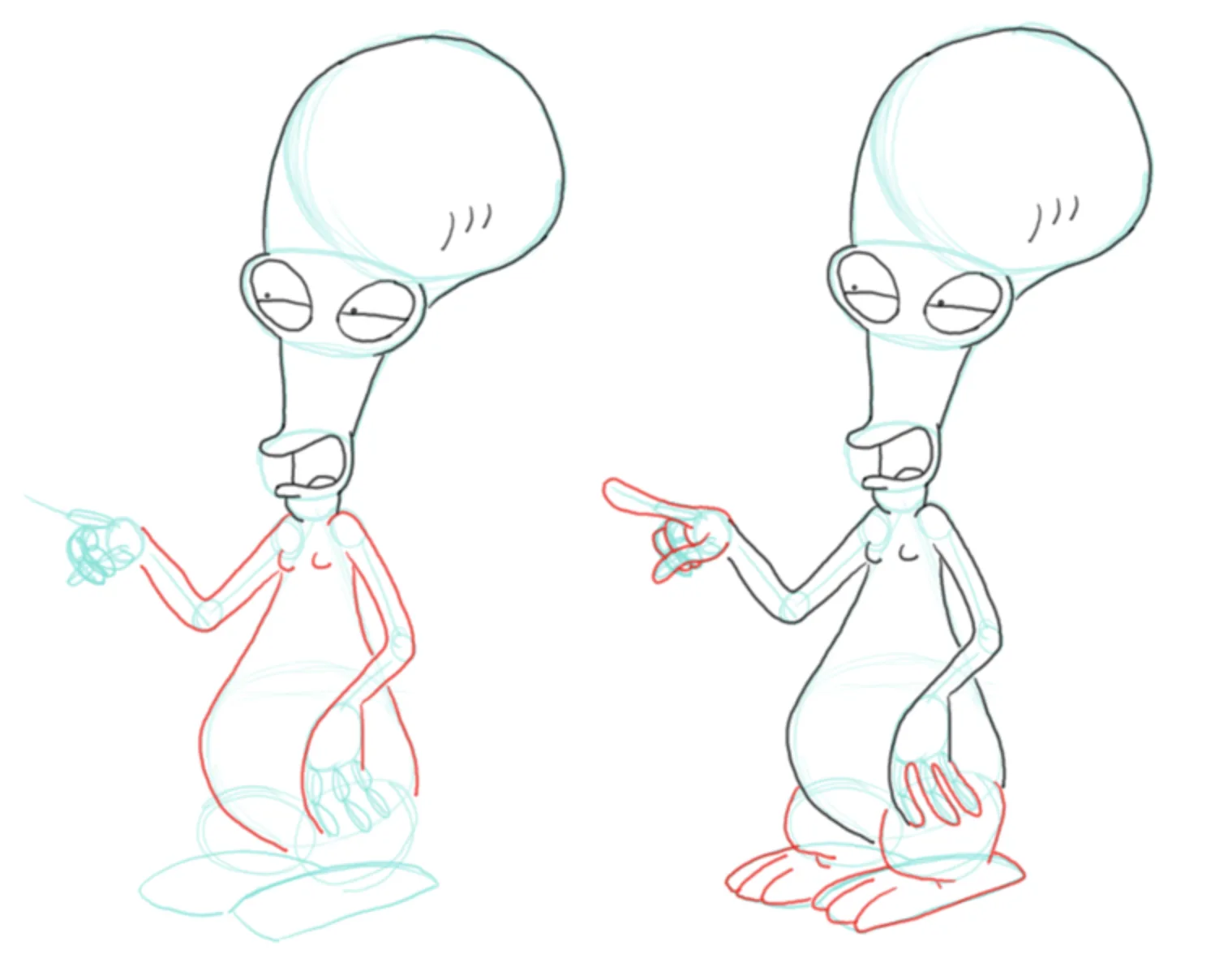
The American Dad show cannot be complete without this alien, and it is the highlight of the show in most of the episodes.
He is not just fun to watch, but easy to draw as well.
You can draw the body as the alien you always had in mind and add some details to make it more defined.
His body is mostly ovals or spheres with nothing too defined.
Just take care of the head of him as it is the trickiest part of his body, and you are good to go with everything else.
Step by Step Instructions: Drawing How to Draw
16. Popeye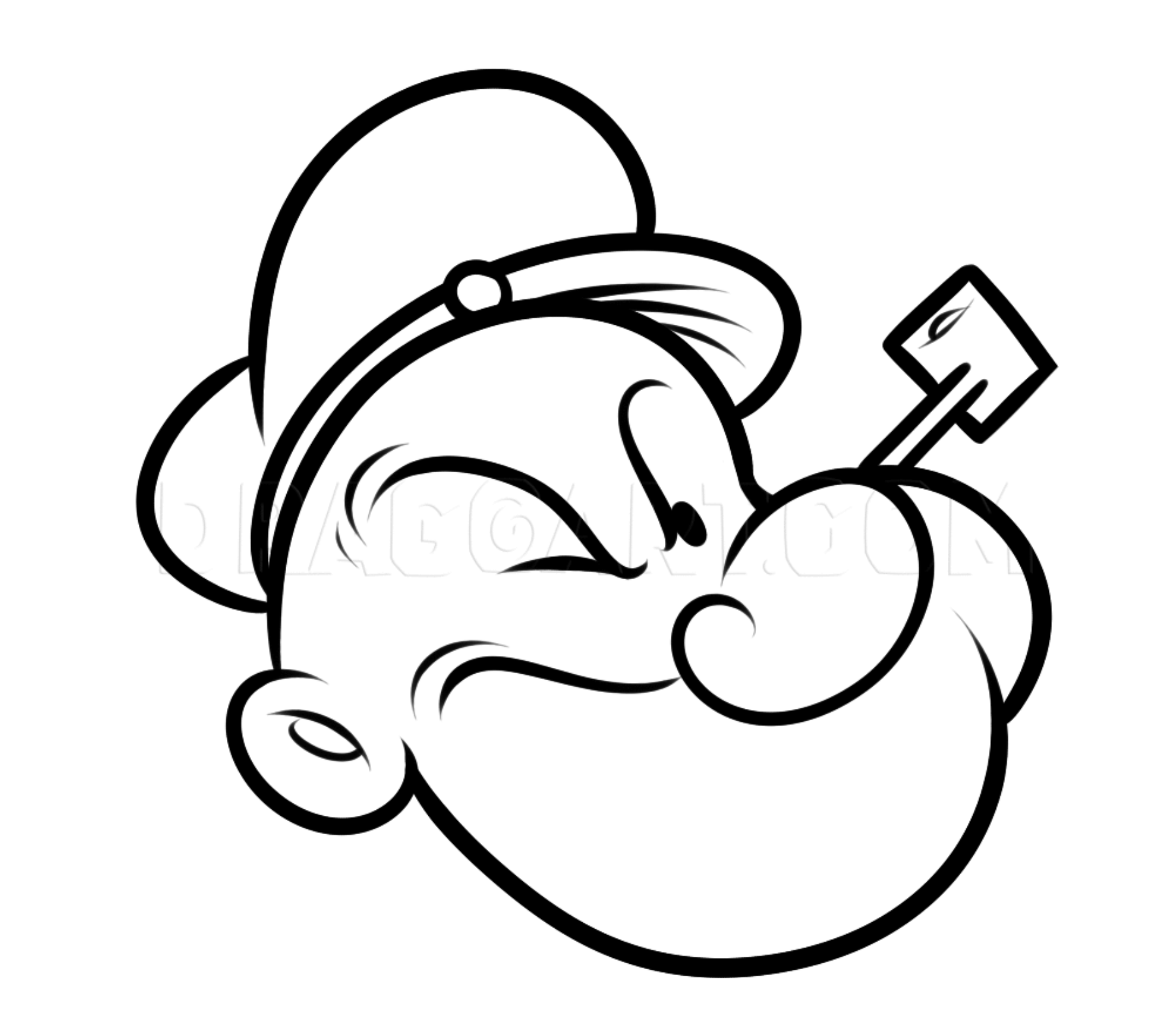
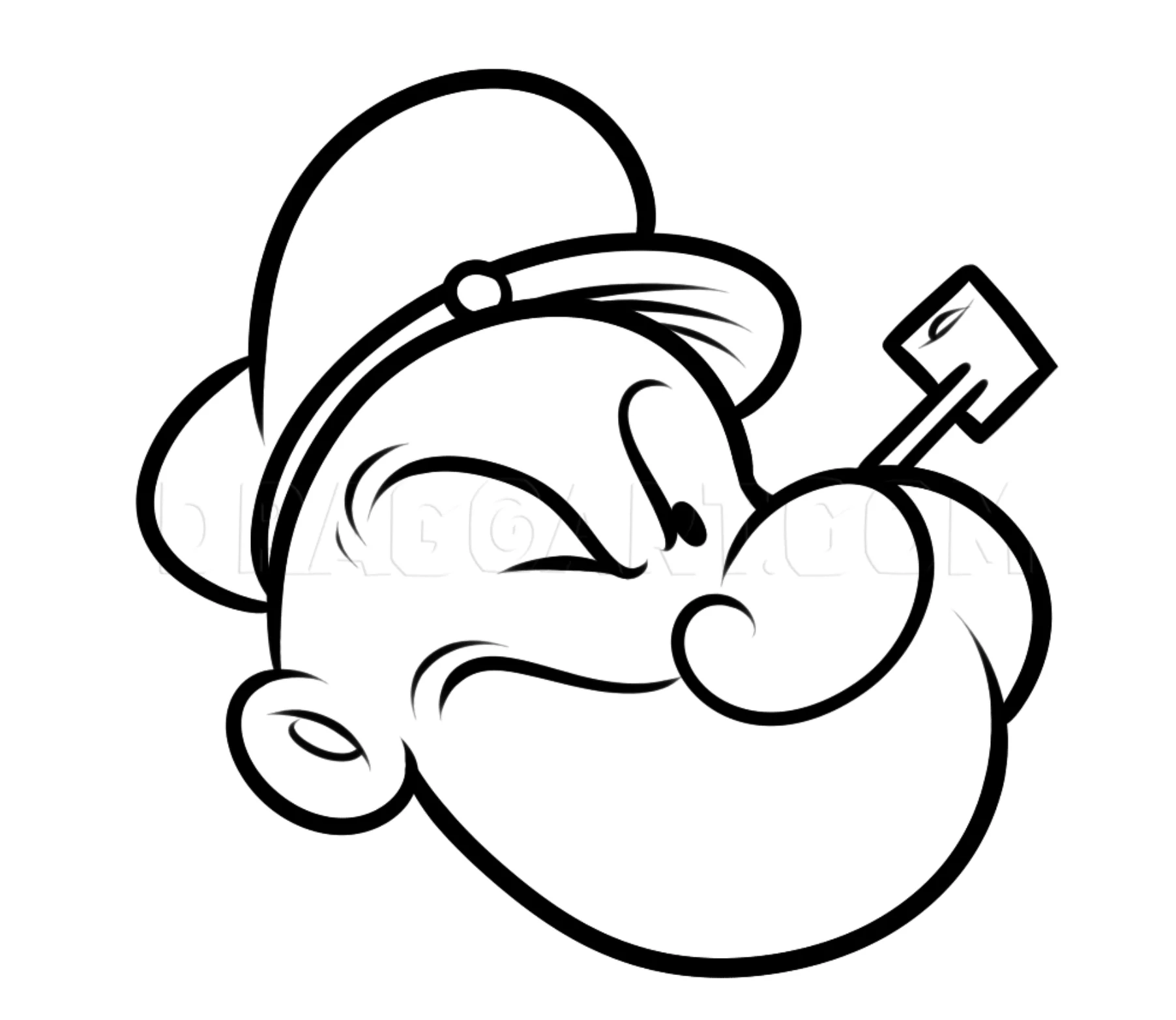
So, here is another cartoon character that you can draw very easily.
His name is Popeye. It is quite fun to draw this cartoon character.
Not only the kids but adults also love to draw Popeye.
With a large chin and large over-sized forearms, you can add some basic shapes and lines.
Add some color over them and you are good to go.
Step by Step Instructions: DragoArt
17. Barney Rubble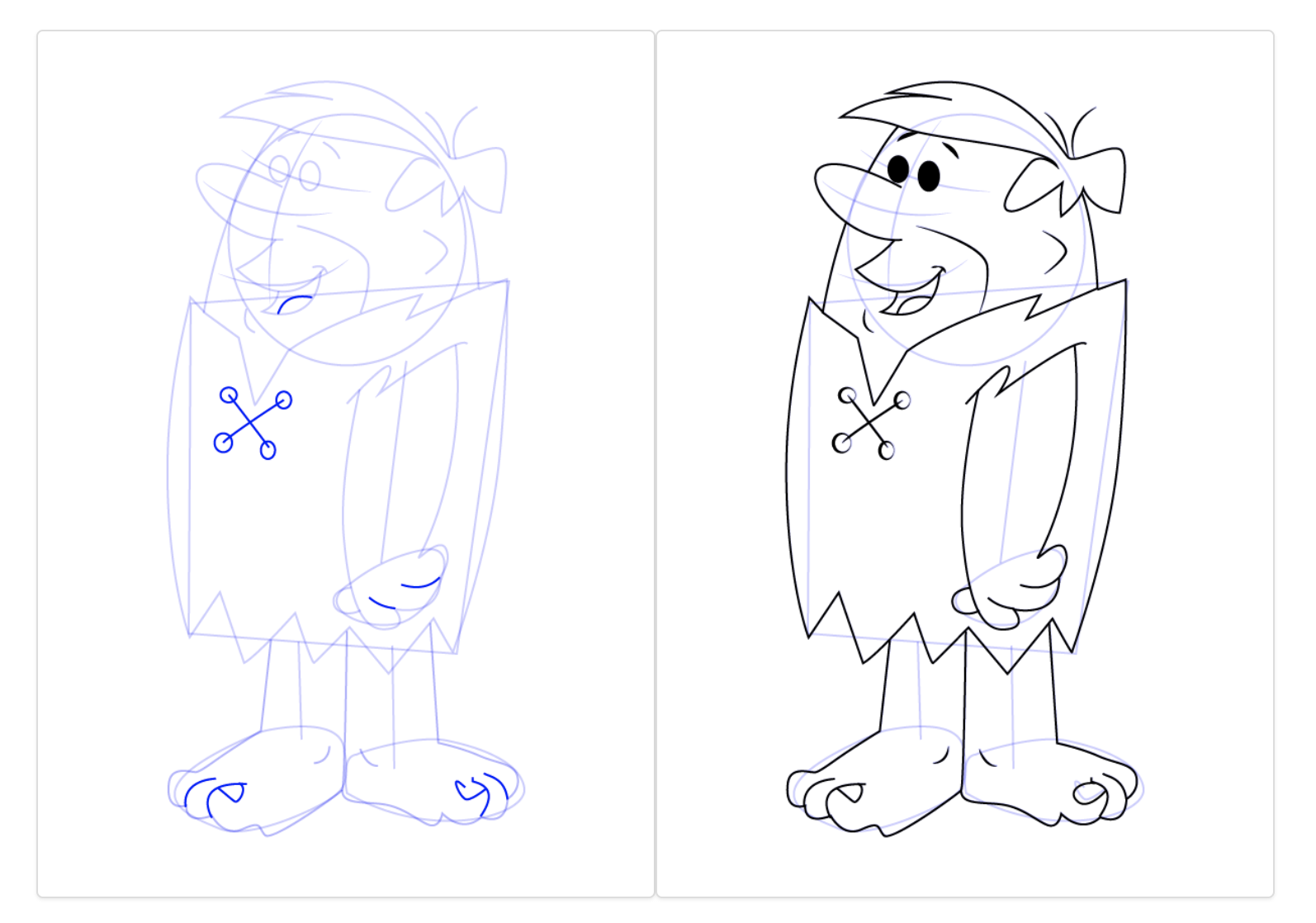
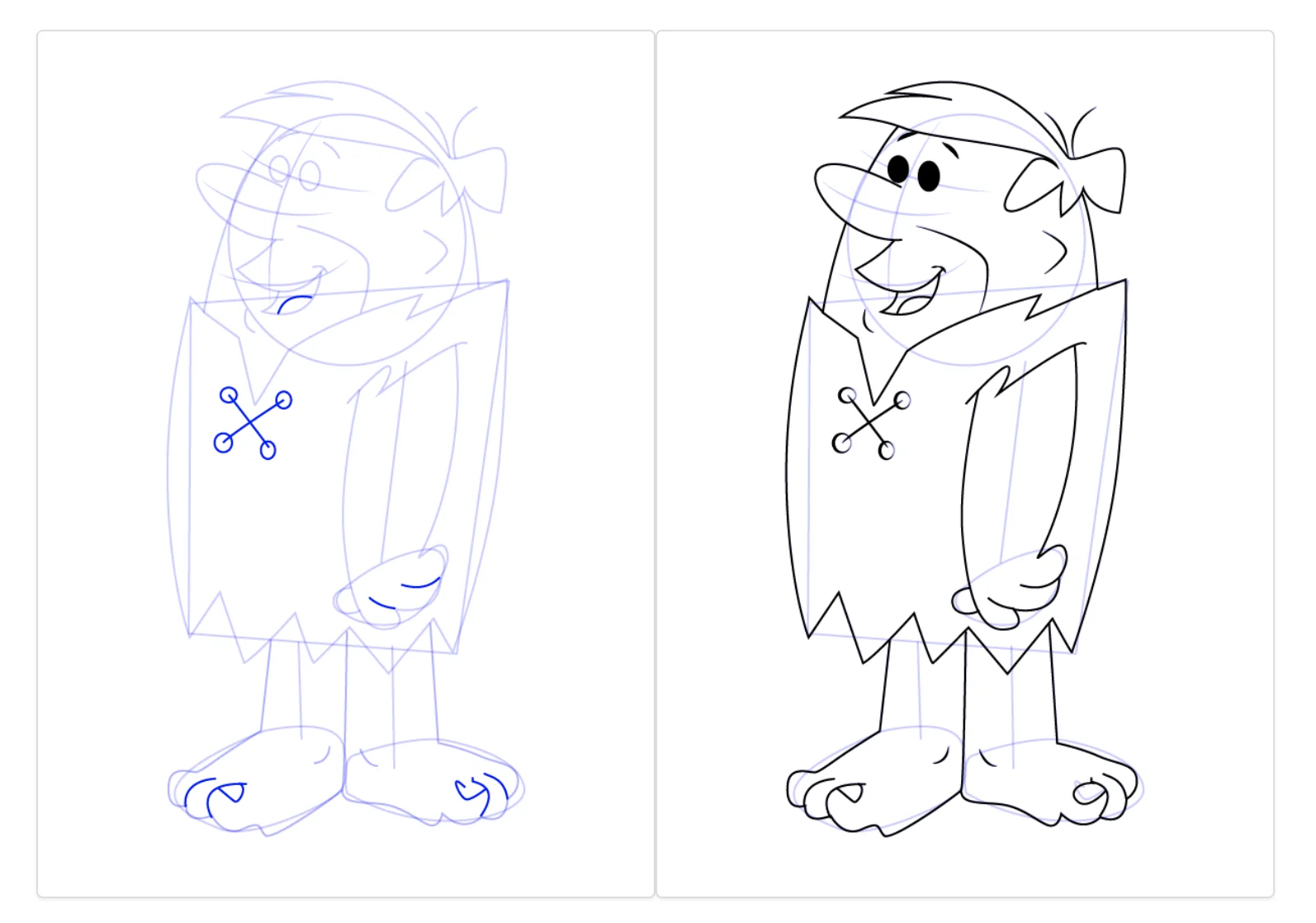
Another popular cartoon character in our list that is quite easy to draw is Barney Rubble.
He is one of the quirky characters of the animated television series.
It is a simple character.
Just add some simple shapes, lines, and draw his big feet and ears.
Add yellow color on his hair and brown color on his clothes.
Once you get to know which shapes work better for drawing Barney Rubble, you can easily draw Barney Rubble from any angle you want.
Step by Step Instructions: Drawing Tutorials 101
18. Bart Simpson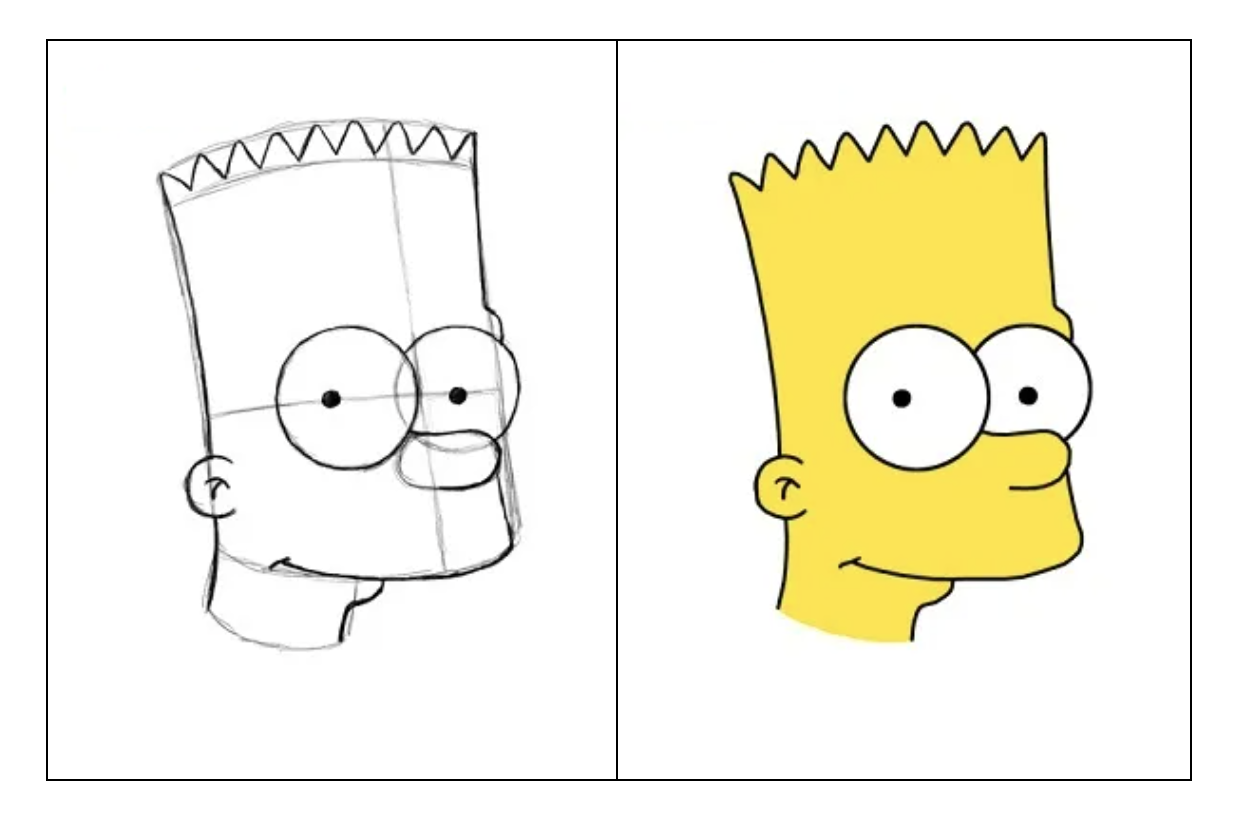
Another famous cartoon character of the American animated TV series that you can draw easily is Bart Simpson.
With spiky yellow or blond hair and two-colored clothes, kids do not only love to watch this character but they like drawing it as well.
It is quite easy to draw Bart Simpson.
You can find some simple shapes to draw it.
Step by Step Instructions: Easy Drawing Tutorials
19. Scrooge McDuck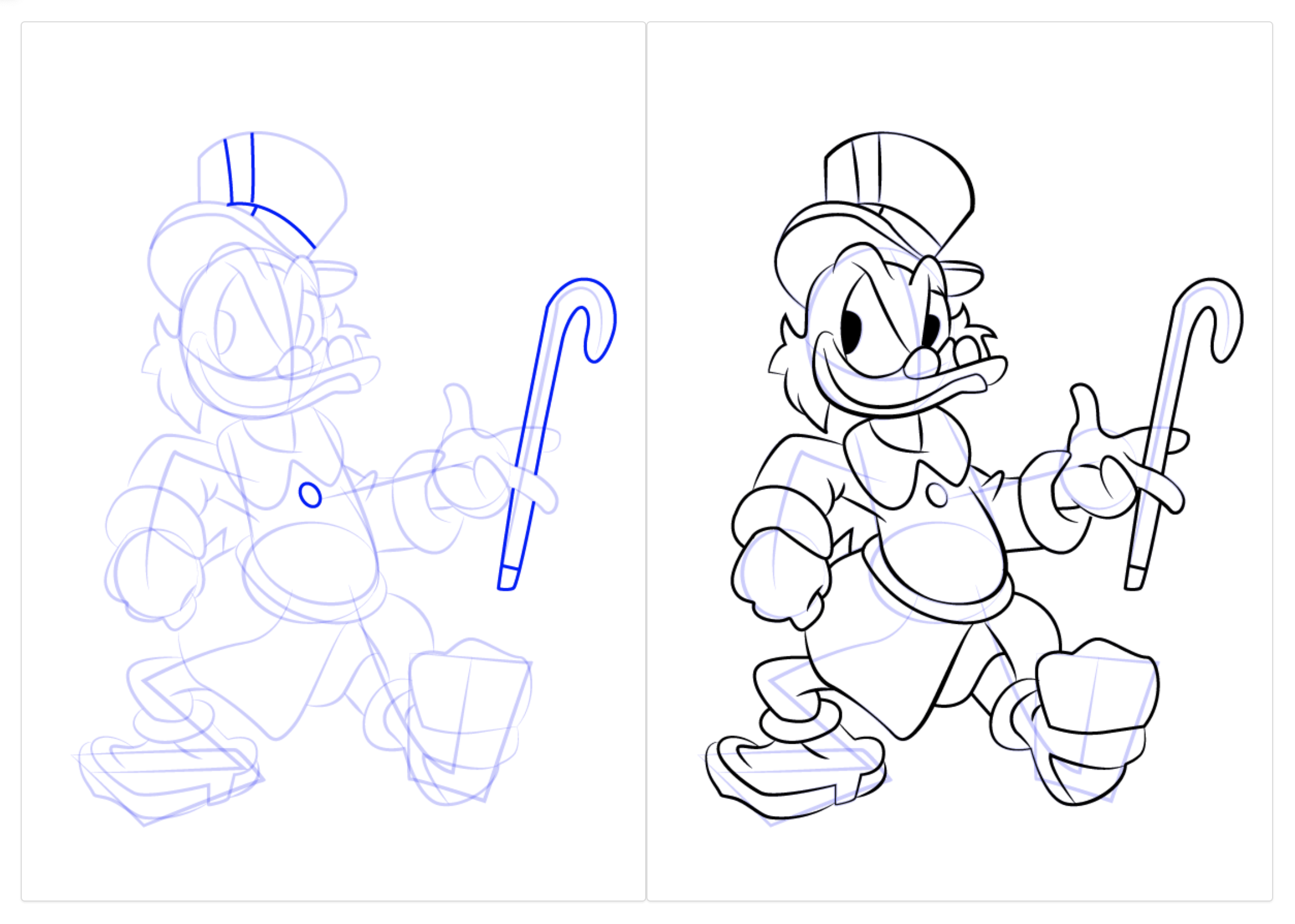
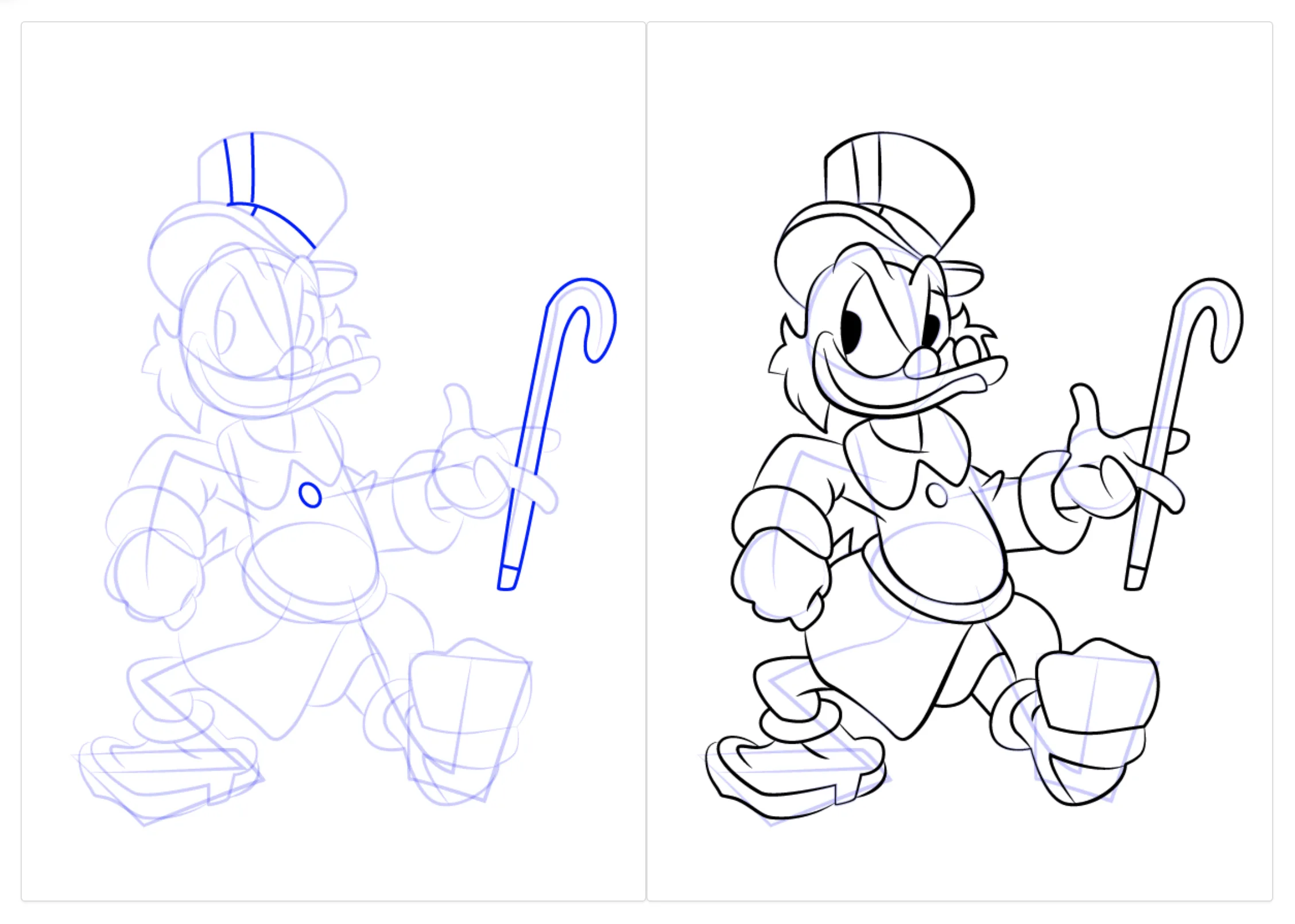
Scrooge McDuck is another fun cartoon character that not only the children but adults also love to draw.
With a unique hat, small reading glasses, and a smiling face, it is very easy to draw Scrooge McDuck.
Step by Step Instructions: Drawing Tutorials 101
20. Soos Ramirez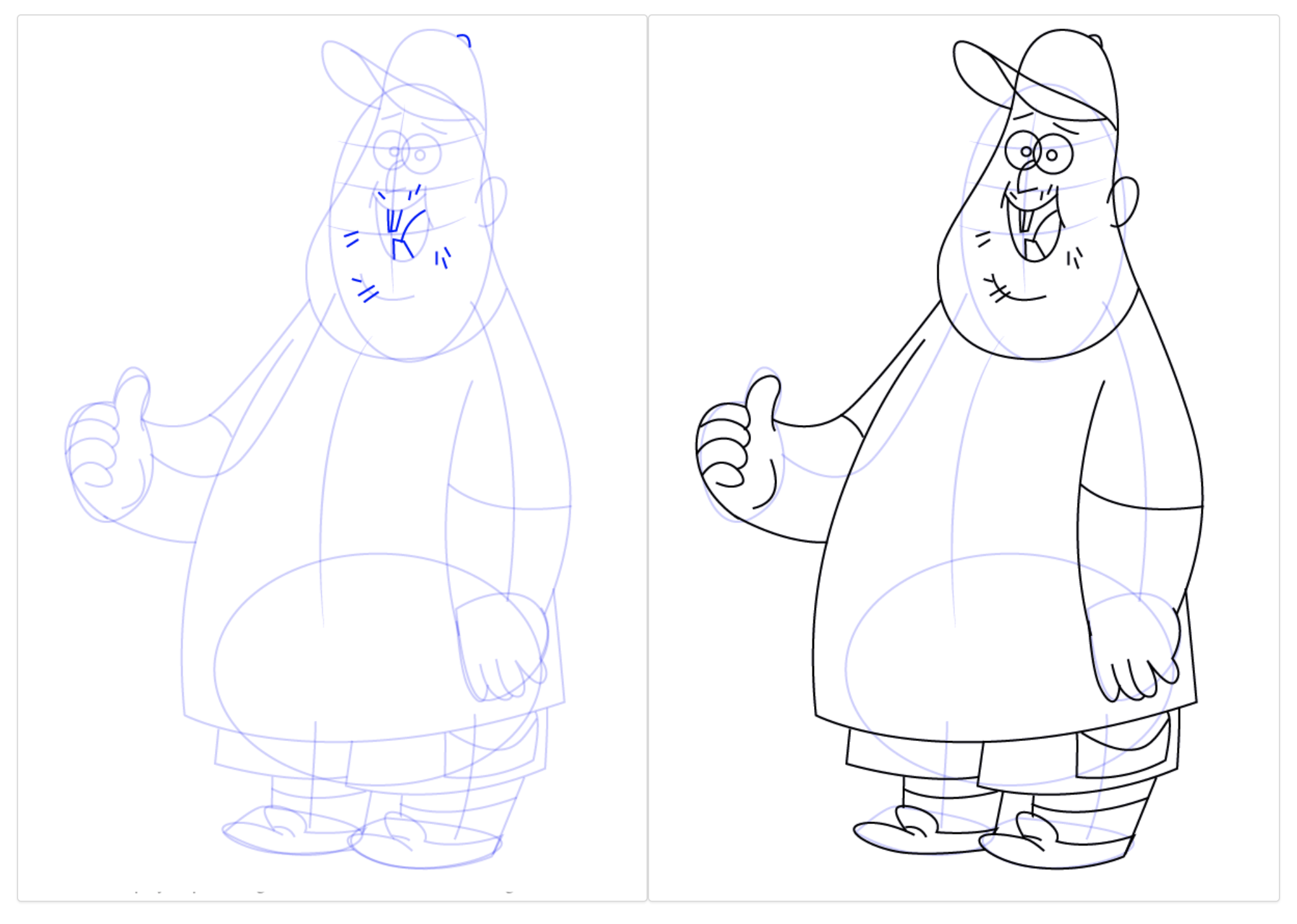
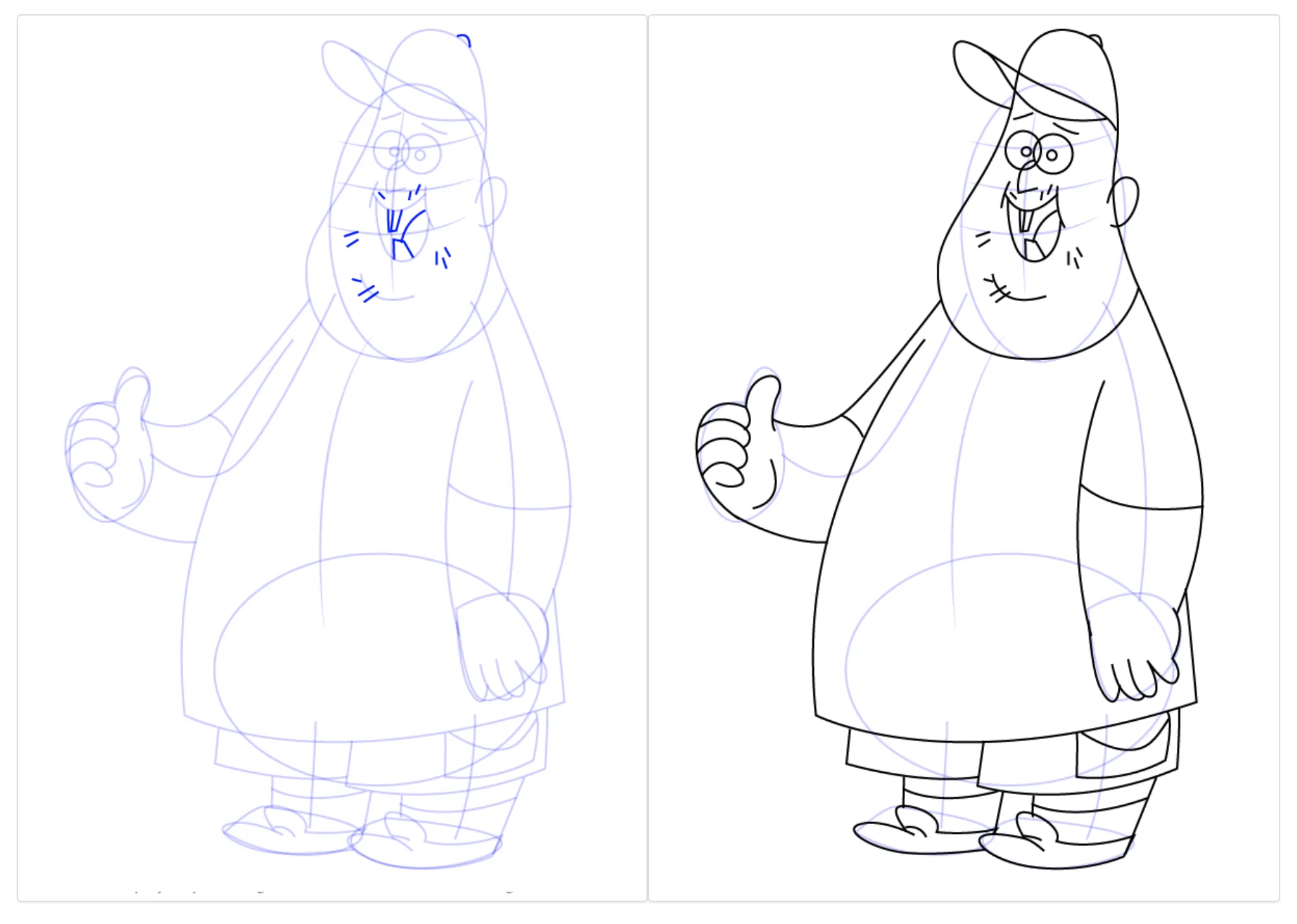
If I talk about cartoon characters, there is one popular character that can never be left out.
And that is Soos Ramirez. He is a chubby happy-go-lucky and lovable guy with round-shaped eyes.
Add some green color on his shirt, white on his pants/shorts, and grey on his hat and shoes.
For drawing Soos Ramirez, add some little details and you are good to go.
Step by Step Instructions: Drawing Tutorials 101
Step‑by‑Step Mini‑Tutorials
Each demo is designed to finish in ≈ 5 minutes. Grab an HB pencil for construction, a fineliner for clean lines, and let’s go!
Classic Cartoon Cat
- Skeleton: Draw a large circle (head) sitting on a slightly wider oval (body).
- Guidelines: Add a vertical center line and a horizontal eye‑line halfway down the head.
- Ears & Tail: Triangle ears on top; a candy‑cane–shaped tail sprouting from the back.
- Face: Two large ovals for eyes, a tiny upside‑down triangle nose, and a “3” shape for the mouth.
- Limbs: Four stubby rectangles for legs; curve the front two inward for a cute pigeon‑toe stance.
- Finalize: Ink the best lines, erase construction, add three whiskers per cheek, and fill the pupils—leave tiny white highlights for life.
Smiling Stick‑Figure Hero
- Gesture: Lightly sketch a stick figure in a power pose—legs apart, fists on hips.
- Head & Face: Circle head; add two dots for eyes and a wide “U” smile.
- Costume Blocks: Thicken the torso stick into a rectangle (chest) and add a belt line.
- Arms & Legs: Encase limb sticks in slim rectangles; taper slightly at wrists and ankles.
- Cape: Draw a billowing triangle behind the shoulders; let it flow to one side for motion.
- Finalize: Ink, erase guides, and color the cape and belt for instant hero vibes.
Chubby Penguin
- Body Shape: Draw a vertical oval—wider at the bottom like an egg.
- Head Separation: Lightly pencil a horizontal line one‑third from the top to mark the face area.
- Flippers: Two teardrop shapes, one on each side, angled downward.
- Face: Big circle eyes, tiny triangle beak pointing down.
- Belly Patch & Feet: Inside the body oval, draw a smaller white belly oval. Add two small ovals at the base for feet.
- Finalize: Ink, erase guides, color the body dark gray, beak/feet orange, and leave the belly white.
Simple Super‑Dog
- Head Block: Square with rounded corners. Add a center guideline.
- Snout: Small rectangle jutting from the lower half of the head.
- Body & Limbs: Bean‑shaped body; four cylinder legs, the front two slightly bent.
- Ears & Tail: Two floppy rectangles for ears; a wagging tail curve behind.
- Emblem & Cape: Tiny shield on the chest with an “S.” Add a short cape tapering to a point.
- Finalize: Ink, erase, color light brown fur, red cape, yellow emblem.
Goofy Alien Head
- Main Shape: Wide upside‑down pear (big top, narrow chin).
- Eye sockets: Two large circles that overlap slightly in the center.
- Pupils & Highlights: Smaller circles inside; leave a white dot for sparkle.
- Mouth: Long sideways “D” near the bottom—add two tiny square teeth at center.
- Antennae: Two springy lines on top with circles at the tips.
- Finalize: Ink, erase pencil, add neon green skin with purple antenna tips for extra pop.
Tip: Time yourself—speed builds confidence. When five minutes feels comfy, challenge yourself to complete each character in three!
Expressive Variations
One base sketch can yield dozens of moods—just tweak a few key lines instead of redrawing everything from scratch.
1. Facial Tweaks
| Feature to Adjust | Small Change → Big Emotion |
|---|---|
| Eyebrows | Angle upward in the middle for “worried”; tilt both ends downward for “angry.” |
| Eyes | Shrink pupils for “surprised”; stretch into tall ovals for “excited”; half‑close for “sleepy.” |
| Mouth | Tiny upside‑down “U” for a pout; wide sideways “D” for laughter; zig‑zag line for frustration. |
2. Head & Body Gestures
- Tilt the head left or right to add curiosity or confusion.
- Hunch the shoulders and tuck arms in for shyness; spread arms wide for enthusiasm.
- Shift weight to one leg for a relaxed vibe; stand on toes for anticipation.
3. Costume & Prop Swaps
- Add a simple hat or bow tie to give personality without complex redraws.
- Swap a cape for a backpack to turn your superhero dog into an intrepid explorer.
- Tiny holding props (balloon, smartphone, ice‑cream cone) instantly change the scene.
4. Color Mood Shifts
| Palette | Instant Feel |
|---|---|
| Warm brights (red, orange, yellow) | Energetic, playful |
| Cool pastels (mint, lavender, sky blue) | Calm, friendly |
| Monochrome + one accent | Modern, edgy |
Quick Drill: Draw a face emoji, duplicate it three times. On each copy, alter only the eyebrows, mouth, and one prop—see how many unique characters you can invent in under 10 minutes.
Common Mistakes & Fast Fixes
| Mistake | How It Shows Up | Fast Fix |
|---|---|---|
| Fuzzy “Chicken‑Scratch” Lines | Multiple short, scratchy strokes make the drawing look messy. | Slow down. Draw one confident stroke, lift the pencil, then place the next. Practice single‑stroke circles for five minutes a day to build muscle memory. |
| Lopsided Symmetry | Eyes, ears, or limbs don’t align, making the character feel “off.” | Sketch a light vertical center line (and horizontal eye‑line on heads). Check alignment by flipping the page upside‑down or mirroring your canvas. |
| Over‑Complicating Details | Adding tiny fur strands or armor plates bloats an “easy” design. | Limit yourself to a 20‑line maximum rule. If you pass 20 lines, simplify or merge shapes. |
| Stiff Poses | Characters stand straight like mannequins, lacking life. | Start every figure with a quick gesture line showing motion (e.g., an “S” curve for a lounging cat). Layer shapes on top of that flowing line. |
| Uneven Line Weight | Random thick‑and‑thin lines look accidental. | Use light pencil for construction, then ink with a single pen size—or deliberately thicken outer contours and key features for a clean hierarchy. |
| Mud‑Colored Palettes | Too many hues or heavy shading dulls the drawing. | Pick just 3–5 harmonious colors (one main, two accents, optional highlight/shadow). Test swatches on scrap before committing. |
Quick Self‑Check: After finishing a sketch, hold it at arm’s length for five seconds. Whatever pops out as “weird” first—fix that one thing immediately.
Next‑Level Tips
1. Add Simple Shading
- Flat color first: Fill each shape with a solid hue so shadows sit cleanly on top.
- One‑tone shadow: Choose a single, darker version of your base color (≈ 30 % darker) and place it on the “away‑from‑light” side of each form.
- Soft eraser blend (optional): Feather the edge where shadow meets light for a smoother look—works great with colored pencils or digital airbrushes.
2. Pop‑Out Highlights
- Use a white gel pen (traditional) or a hard‑edge digital brush to add tiny sparkles on eyes, noses, or shiny props.
- Less is more: 2–3 bright spots per character keep the style clean and readable.
3. Introduce a Quick Background
- Draw a simple shape “ground” shadow (oval under the feet) so the character isn’t floating.
- Add a single prop—like a speech‑bubble or small plant—to create context without crowding the scene.
- For color harmony, sample one accent color from your character and reuse it in the background element.
4. Play with Perspective Lite
- Try a ¾ view head: Shift one eye slightly smaller and move the vertical center guideline off‑center.
- Foreshorten limbs by shortening the shape and overlapping it slightly behind a closer element; this adds depth with minimal effort.
5. Experiment with Stylization
| Style | Quick Adjustment | Example |
|---|---|---|
| Chibi (Super‑Cute) | Enlarge head to 1 : 1 body ratio, shrink limbs. | Chibi penguin with oversized eyes |
| Retro Rubber‑Hose | Add noodle‑limbs and pie‑cut pupils. | Classic 1930s cat |
| Minimalist “Blob” | Remove facial outlines, keep dot eyes and simple mouth. | Single‑stroke ghost |
5‑Minute Practice Drills
Short, timed drills turbo‑charge improvement because they force decisive lines and focused repetition. Grab a timer, pick one exercise, and go!
1. Emoji‑Face Grid
- Draw a 3 × 3 grid of circles.
- In each circle, create a different emotion using only eyebrows, eyes, and mouth.
- Limit yourself to 30 seconds per face.
2. 30‑Second Gesture Cats
- Set a timer for 30 seconds.
- Sketch the overall pose of a cat (sitting, stretching, pouncing) with simple lines—no details.
- Reset and repeat 10 times; variety beats perfection.
3. Silhouette Speed Rounds
- Fill half a page with random blobby shapes in pencil.
- In 5 minutes, turn each silhouette into a recognizable cartoon (bird, monster, robot) by adding minimal lines and features.
- Focus on letting the existing shape dictate the design.
4. One‑Line Challenge
- Choose a simple character (e.g., the penguin).
- Draw it in a single continuous line without lifting your pencil or stylus.
- Repeat twice; aim for smoother flow and fewer wobbles each time.
5. 5‑Shape Mash‑Up
- On scrap paper, randomly draw five basic shapes (circle, square, triangle, oval, rectangle).
- Connect and modify them to invent a brand‑new character within 5 minutes.
- Name the character when you’re done—adds a fun storytelling twist.
Keep It Fun: Record each drill’s date and pick your favorite sketch. Over weeks, you’ll see clear progress and build a personal library of characters to refine later.
Conclusion
Drawing is a thing that can be improved by practice.
Most people like to draw something when they get bored.
For example, some people like to draw flowers, animals, landscapes, houses, and much more.
While there are some people who like to draw their favorite cartoon characters.
If you are one of them, you can draw all the above-mentioned cartoon characters.
From Bugs Bunny, Patrick Star, Tom and Jerry to Catdog and Peter Griffin, all these are easy cartoon characters to draw.
They are also cute and fun to draw.
They can be built on some simple shapes and do not require a lot of practice. So, do not wait anymore.
If you are getting bored, pick a paper and pencil, pick any of the cartoon characters from the above list, and start drawing. Have fun!
Other featured topics to help you draw things that are easy
- 75 Fun & Easy Stuff To Draw
- 8 Ways to Find Drawing Inspiration That Will Make Drawing Easy
- 8 Easy Marine Life Drawing Tips
Here are Some of my Favorite Drawing Tools
Thank you for reading this article. I hope you found this helpful in improving your art.
Here are some tools I use as an artist, and I hope you find them helpful.
These are affiliate links, so if you decide to use any of them, I may earn a commission at no additional cost to you.
Pencils – I love using Staedtler drawing pencils (on Amazon).
I’ve been using them for more than 15 years. I’ve never had the lead break on me and they are quite sturdy. They also come in a wide range of hard to soft.
Color Pencils – I’ve used Derwent for a long time.
The rich colors in their color pencils (on Amazon) and the way they blend are amazing.
Markers – Copic markers (on Amazon) are my number 1 choice. I love these markers!
The way they blend and the marker texture they give when you render details is nothing short of amazing!
Frequently Asked Questions
My lines are shaky—how can I make them smoother?
Shaky lines usually come from drawing with your wrist alone. Try standing or sitting farther back and move your whole arm (elbow and shoulder) for longer, fluid strokes. Warm‑up drills—like drawing rows of parallel lines and circles for two minutes—also build muscle memory. Switching to a slightly heavier paper (70 lb / 105 gsm or above) can give your pencil better traction, reducing jitters.
How do I pick colors that look good together?
Limit yourself to three hues: one main color, one accent, and one neutral (white, gray, or black). For foolproof harmony, choose colors that sit next to each other on the color wheel (analogous) or directly opposite (complementary). Test swatches on scrap paper first; if they clash, lighten or darken one shade until they feel balanced.
Do I need expensive supplies to start?
Not at all. A standard HB pencil, copier paper, and any black pen will get you through all the tutorials in this post. Upgrade only when you find a specific limitation—like ink bleeding through thin paper or markers streaking. Digital artists can use free apps such as Autodesk SketchBook or Medibang Paint on tablets or even phones.
Can I sell simplified fan art of famous characters?
Fan art legality varies by publisher. Selling art that uses copyrighted characters without permission can infringe on intellectual‑property rights. Many companies tolerate small‑scale sales at conventions or online shops, but it’s never guaranteed protection. If you plan to monetize, focus on your own original characters or get a clear license before selling.
How long should I practice each day?
Even 10 focused minutes beat zero. A balanced routine could be:
- 3 min warm‑up lines and circles
- 5 min drawing a mini tutorial character
- 2 min reviewing mistakes and quick fixes
Consistency trumps marathon sessions—aim for daily practice, and you’ll see noticeable improvement within a few weeks.