Study Focus Sphere - YouTube Channel for Focus Music
Skip to Content

30 Resin Alternatives That Are Cheaper and Eco-friendly

30 Resin Alternatives That Are Cheaper and Eco-friendly

Like most products, resin alternatives exist to combat its high costs. You might know resin as your favorite adhesive, varnish, and painting medium that has substantial resistance against heat and other chemicals. 

But it may not be too friendly in your pocket. When this happens, it’s time you consider products alternative to resin.

Hard Plaster is the cheapest resin alternative. Other alternatives include:

  • Glass tile and decoupage technique for jewelry
  • Luxe WaterFX in clear is an alternative for painting
  • ArtResin is a nontoxic alternative
  • BriteTone for tumblers
  • Hard plaster for epoxy resin
  • ResinTech Mag-Mb for CR spotless resin
  • Paraffin wax can be used for molds

These are only a few safe alternatives to epoxy resin alternatives. Here’s a detailed list of many other resin substitutes you can use. 

Why Avoid Traditional Resin?

Petroleum Footprint — High Greenhouse-Gas Emissions. Conventional epoxy and polyester resins are made from fossil-based feedstocks; a recent life-cycle analysis estimates ~6.6 kg CO2-eq emitted for every kilogram of commercial epoxy produced — several times higher than many mineral or bio-based casting mixes.

  • Health & Safety Hazards. Uncured resin and hardener can irritate skin, trigger allergic contact dermatitis, and sensitize airways; even brief over-exposure to vapors may lead to chronic respiratory issues.
  • Indoor Air Quality Concerns. Epoxy systems off-gas volatile organic compounds (VOCs) during mixing and curing, requiring PPE and forced ventilation—impractical for many home studios.
  • Disposal & Micro-plastic Waste. Once cured, resin cannot be re-melted or truly recycled; discarded pieces contribute to long-lived plastic pollution in landfills and waterways.
  • Cost Volatility. Because pricing tracks crude-oil markets, epoxy often retails at US $15–30 kg, whereas mineral or plant-based casting blends start below US $5 kg.

What Makes a Good Resin Alternative?

Not every substitute checks the same boxes. Use the criteria below to spot options that save money and lighten your environmental impact.

  • Low Toxicity / Low-VOC. Safe to handle indoors with minimal PPE.
  • Reduced Carbon Footprint. Mineral-based or bio-based binders (e.g., Jesmonite, lignin-epoxy hybrids) can cut embodied CO2 by 30-60 % versus petro-epoxy.
  • Affordability & Availability. Readily sourced at hardware or art-supply stores—ideally under US $10 kg.
  • Performance Fit. Does the material deliver the clarity, hardness, or weather-resistance your project needs?
  • End-of-Life Options. Prefer substrates that are recyclable, compostable, or at least chemically inert in landfill.
  • User-Friendly Curing. Water-based or ambient-temperature systems avoid high heat or complicated catalysts.

How to Choose the Right Alternative

Follow this four-step checklist, then match your answers to the quick-pick guide below.

  1. Define Your Goal. Is the piece purely decorative, load-bearing, waterproof, or food-contact?
  2. Rank Your Priorities. Transparency, surface detail, outdoor durability, weight, and budget rarely all max out at once.
  3. Assess the Work Space. Can you tolerate dust (cement), moisture sensitivity (plaster), or longer cure times (bio-epoxy)?
  4. Plan Finishing & Disposal. Consider sanding, sealing, or composting pathways before you pour.

Quick-Pick Guide

  • Need crystal-clear, glass-like casting?  Choose a bio-based epoxy or UV-cure acrylic.
  • Budget décor with a stone feel?  Go for plaster of Paris or lightweight concrete.
  • Outdoor planters or high-impact items?  Pick Jesmonite AC730 or a cement-resin composite.
  • Kids’ crafts or food-safe molds?  Try gelatin/glycerin or corn-starch clay.
  • Ultra-low carbon, indoor décor?  Experiment with lignin-reinforced bio-resin blends.

Tip: Score each candidate (1–5) against the six criteria above and pick the material with the highest total for your specific project.

Other Related Posts

DISCLOSURE: This post contains affiliate links, meaning I may get a commission if you decide to make a purchase through my links, at no cost to you. I only recommend products that I’ve used or really like. Please read my disclosure for more info. 

cheaper resin

Resin Alternative For Casting

metal casting

What to use instead of resin? For the record, latex is the cheapest casting resin available in the market. 

If you are looking for a resin alternative for casting that is even cheaper than latex, it would do well if you go for hard plaster or concrete. 

These casting materials are much more affordable than latex and are an excellent resin alternative for casting. You can also look into the hyperion epoxy alternative.

So, what can I use instead of resin? Experts also consider slush latex, plastic, and metal as a good resin alternative for casting. 

These materials are a great and reasonable option if you aren’t willing to buy epoxy resins due to their high costs. Their process of casting is also very much like that of using resin to do your casting.

Resin Alternative For Jewelry

resin alternative for jewelry

Resin is the best option if you want to make jewelry, especially safe alternatives to epoxy resin. 

However, if you are not comfortable with resin, you can always use a resin alternative for jewelry. 

You can easily make jewelry without resin with ‘glass tile and decoupage style technique.’ For that, you need to have a water-soluble sealant, paper, glue, and spray adhesive. Use this to help you with this technique!

You can easily use glue, sealants, and non-resin spray adhesives to make jewelry that has the same, if not better, look than jewelry made using resin. 

DIY jewelry made from simple beads, strings, glue, and other art pieces is very captivating to the eyes and you can use a cheap resin alternative.

Resin Alternative For Painting

resin alternative for painting

Resin gives off a shiny and lustrous look when used in paints, but what if we tell you that resin alternatives for painting can give similar (or better) results when used in acrylic paints. 

While making use of varnish is a great resin alternative for painting, it doesn’t give off the glow that comes with colors made with resin. 

The hyperion epoxy alternative is a great choice for a top coat resin alternative.

So, what can I use instead of resin? Varnish is also less likely to withstand heat and chemical reactions. 

Artists use Luxe WaterFX in clear, TriArt Liquid Glass, DecoArt Clear Top Coat, and Liquitex High Gloss to use as a substitute for resin. 

These state-of-the-art products give that resin-like shine that you desire but can add some fantastic painting effects to your artwork. 

You can use multiple layers of these products to coat your piece of art, and you can even add other pigments to them.

However, these are just a few products. 

There are many resin alternatives for painting available in the market that are cheaper than resin products and guarantee a glossier finish.

NonToxic Resin Alternative

art resin

If toxicity is your concern when using resin, you can go for a non-toxic resin version for your use. ArtResin is essentially a non-toxic variety of resin and an eco friendly resin alternative. 

It is non-toxic resin alternative, non-flammable, non-hazardous, and is widely used by resin artists around the world. 

ArtResin is made from an incredibly complex formula. There are no solvents or low-quality diluents in its composition. 

Due to this, if used correctly, every component of ArtResin reacts in the chemical reaction leaving no harmful substances behind. Pretty good for a cheap resin.

There are no fumes or volatile organic compounds given off, which means that there’s no danger to your respiratory system with ArtResin on your hands. 

There are also no proofs seen of any other health problems either associated with ArtResin epoxy alternative. 

However, it is highly recommended that you DO NOT use any other substances with ArtResin, as this might alter its environment-friendly nature. 

Another excellent non-toxic resin alternative is EcoPoxy or the hyperion epoxy alternative.

It provides bio-based, non-toxic epoxies that are a greener alternative to other epoxy resins on the market, making it a solid epoxy resin alternative. 

It can be used to make accessories, bonding, and create colossal structures, coating, and it is also a fantastic resin alternative for casting. 

The product is non-hazardous epoxy alternatives and does not create any harmful gases or VOCs that might be harmful to your health.

Resin Alternative For Tumblers

crystalac

There are many resin alternatives for tumblers offered by Crystalac and other cheap resin alternative products area available. 

They offer a tumbler kit. Not only do these kits serve as an alternative to resin for tumblers, but they also make you fall in love with them. 

These are a few of their products that you might find helpful as an epoxy alternative.

  • BriteTone – This is the highest quality top coat that you can find in the market. When it has been cured, it is even glossier and more reliable than resin.
  • Universal White – It is a primer offered by Crystalac and serves as an excellent resin-free alternative to spray paint. It has a white base and a flawlessly smooth finish.
  • Black Gloss – If you want a resin-free alternative with a black base, Black Gloss must be your go-to. It gives off a beautiful finish and has an excellent base coat.
  • Craftnique pigments – With these pigments, you can create any base color and replace the need for spray paints and can be used to tint your UW or BT.

Resin Alternative For Coasters

clay

It’s very much possible to make a coaster with the use of resin or an eco friendly resin alternative. 

These resin alternatives for coasters will make your coasters pop and get the neat and beautiful look that you desire. 

You can use household materials to create gorgeous, DIY coasters

These materials include clay, sewing clothes lines together, felt, leather scraps, wine corks, and wood, and then add your epoxy resin substitute. 

An absorbent material like ceramic and sandstone would also be an excellent resin alternative for coasters. 

Epoxy alternatives as porous substances are great at absorbing the water vapors that appear on the surface of your glasses/cups due to condensation. 

Creating ceramic coasters with a wide surface area would be a good option as larger surfaces guarantee a more significant space for your glass, and it won’t slip off the edges.

Resin Alternative Names

ceramic

People have their grievances with resin. They want an epoxy substitute.

Some say that it is too expensive and are looking for a cheap alternative to epoxy resin. Others say that it contains harmful, toxic substances and isn’t environment-friendly at all. 

Lucky for them, resin alternatives exist and ensure that the results are as good as using resin. 

The resin alternative mainly depends on the type of use that you are going for.  For example, you can go for an eco friendly resin alternative or a non toxic resin alternative. Some resin alternatives are:

  • Fimo
  • Clay
  • Slush Latex
  • Metal 
  • Plastic
  • Concrete
  • Plaster
  • Alabaster

If you’re going for paints, then – Luxe WaterFX in clear, TriArt Liquid Glass, DecoArt Clear Top Coat, and Liquitex High Gloss.

If you want to make tumblers – Crystalac’s tumbler kit.

Wood Resin Alternative

resin alternative for wood

Wood is an excellent alternative to resin and an epoxy substitute. Artwork resulting from woodwork has its uniqueness and beauty. 

Woodwork has been carrying its charm since ancient times. Today, it can replace resin in many things as an epoxy resin substitute. 

However, as the resin is impervious to UV rays and is resistant to corrosion, items made from resin are more durable and robust than those made out of wood. 

Still, wood has its uniqueness in creating stunning furniture, making decorative items, sports equipment, and many more. 

Wood also has many commercial and industrial uses and can be used in construction and fencing as well.

Epoxy Resin Alternative

epoxy resin alternative

People tend to boycott epoxy resin due to its toxic nature and high prices. They are looking for a  cheap alternative to epoxy resin and safe resin alternatives.

Epoxy resin has many uses, including its primary use as an adhesive. However, this does not mean that it cannot be substituted along with the substitute for resin. 

There are many substances that you can use as an epoxy resin alternative. Hard plaster and concrete are excellent epoxy resin alternatives, and their use is not limited to small surfaces only. 

There is also the consideration of cheap resin.

Unlike epoxy resin, concrete and plaster can be easily applied to large surfaces as well as an alternative for resin. 

Other great alternatives to epoxy resin include slush latex, metal, plastic, and alabaster.

Eco-Friendly Resin Alternative

ecopoxy

If you are going for non-toxic products, you can go for ArtResin

This compound of resin is non-toxic resin alternative, non-hazardous, and non –flammable. Its reaction doesn’t result in harmful gases and VOCs. 

EcoPoxy is another environment-friendly resin alternative. Its makers make bio-based epoxies that are socially and environmentally accountable.

It can be used for coating, and in accessories and is a non-toxic resin alternative for casting as an epoxy resin substitute. 

It can also be used in the manufacturing of monumental structures and composite parts by a wet layup.

Clear Resin Alternative

clear resin alternative

Clear resin contains harmful substances in its composition that are known as irritants and sensitizers. That’s why you might want to look for safe alternatives to epoxy resin.

Some good clear resin alternatives are Golden Acrylic Leveling Gel, Objet VeroClear, Clear Glycerin Soap Base, and Museum Gel

These options are much more environmentally friendly and less toxic as alternatives to resin. Also, they are a great way of reducing your spending on clear resin.

Art Resin Alternative

brite tone

To substitute resin in your art, you can always make use of plaster and ceramic or look for safe resin alternatives. 

If you’re looking to paint it as well, go for options like BriteTone, Universal White, Black Gloss, and Craftnique pigments. 

Using woodwork to make art is also a beautiful and unique option among alternatives to resin. 

Carved wood has something about it that makes people go crazy over it. 

Use the woodwork technique to replace resin as an epoxy substitute from your artwork completely.

CR Spotless Resin Alternative

resin tech

ResinTech Mag-Mb is a nearly identical substitute for CR spotless resin refills as an epoxy resin substitute. 

ResinTech sells one on Amazon for approximately $5, but the Mag-Mb comes in a 5cu ft. size of about $50 and costs $250 through irrigation vendors. 

It is a less expensive per pound alternative for resin than the Amazon equivalent and should last a long time if stored in sealed containers. 

Then all you need are refilled cartridge filters that will fit the CR spotless canisters.

UV Resin Alternative

People usually don’t go for UV resin as it shrinks in the molds it’s left in and leaves a residue no matter how much time is given to its curing. It’s also not a cheap resin.

Instead of using UV resin, a good UV resin alternative is 2-part epoxy resin. 2-part epoxy resin is much cheaper, and no additional equipment is needed with it. 

With a UV resin alternative, you won’t need the help of UV light to cure it. For all these reasons these are good alternatives to resin.

Fiberglass Resin Alternative

Recently a fiberglass resin alternative has been designed and goes by the name of AroStruct from VersaFlex and turns out to be a great substitute for resin. 

This fiberglass resin alternative is exclusively designed from polyuria resin and is affordable and essentially non-toxic, unlike the fiberglass you might find in the market. 

This substitute typically dries within 30 seconds and is cured within 60 minutes. 

This alternative to epoxy resin may be used in conjunction with a chopper-mounted spray gun to create parts, molds, or prototypes in minutes. 

Productivity is increased because choppers cut the fiberglass strands to the correct length and toss them in front of the polyuria resin exiting the spray cannon. 

The polyuria resin adheres to the chopped fiberglass strands and is deposited in the fiberglass item mold.

Non-toxic Resin Alternative

EcoPoxy provides bio-based, non-toxic epoxies that are a greener alternative to other epoxy resins on the market if you are looking for safe resin alternatives. 

Customers all across the world are utilizing Ecopoxy to create, construct, and beautify the environment around them as one of the safe alternatives to epoxy resin. 

Another non-toxic resin alternative for art is ArtResin

ArtResin is essentially non-toxic, non-flammable, and non-hazardous, and resin artists all over the world use it as an alternative for resin. 

Clear Epoxy Resin Alternative

golden acrylic leveling gel

Clear epoxy resin includes harmful, irritable substances in its composition. That’s why you may want an alternative to epoxy resin.

Golden Acrylic Leveling Gel, Objet VeroClear, Clear Glycerin Soap Base, and Museum Gel are all fantastic clear epoxy resin substitutes and are much less injurious to health.

Resin Tape Alternative

wax paper

You need to find a resin tape alternative if you are not willing to use tape while curing your resin art. 

The substance has to be non-stick so that the resin won’t stick to it. Using mold release by Castin’ Craft is a great option among epoxy alternatives.

Other everyday substances you can use are wax, polyethylene plastics, greasy surfaces, silicon, and wax paper. 

You can also use polypropylene plastics and freezer papers to dry the resin art.

Resin Mold Alternative

Instead of using resin molds, you can use a resin mold alternative to cure your art pieces. 

So, what to use instead of resin molds? Paraffin wax, polyethylene can be used for most resin products without mold release. 

However, you can also use wood, metal, plaster, and glass as resin mold alternatives.

Resin Release Agent Alternative

petroleum jelly

While going for a resin release agent alternative, going for a non-stick cooking spray is a good and cheap option and is available at every grocery store. 

Other great resin release agent alternatives include talcum powder, petroleum jelly, and vegetable oil. 

If you feel like spending a bit more, you can buy release agent sprays available at grocery stores.

Resin Pigment Alternative

resin pigment alternative

With resin pigments’ prices shooting to the sky, it’s time that people choose a resin pigment alternative

Many cheap and readily available options are available in the market. Some of these are eyeshadow, watercolor paint, nail polish, Kool-Aid, Ink, and Acrylic paints. 

You can also use food colorings and chalk (for pastel shades) to come up with a resin pigment alternative.

Resin Epoxy Alternative

As discussed earlier, concrete and hard plaster are excellent resin epoxy alternatives. There are also plenty of other alternative to epoxy resin.

Other substances that you can go for include metal, plastic, slush latex, and alabaster as a substitute for resin.

Resin Bound Gravel Alternative

Natratex

Natratex is an excellent resin-bound gravel alternative. 

It has decent durability and is much more affordable as compared to resin-bound gravel. 

It is also a perfect substitute for other landscaping materials like tarmacadam and block paving. 

In addition to those, it is even better than resin in the way that it does not peel away over time and gives your projects a neat finish.

Resin Mold Release Alternative

vegetable oil

As discussed earlier, some of the regular household items can make excellent resin mold alternatives. 

These household items include vegetable oil, non-stick cooking spray, talcum powder, mineral oil, and petroleum jelly.

Resin Printing Isopropyl Alcohol Alternative

isopropyl alcohol

If you want to use an alternative for isopropyl alcohol to clean your resin paintings, denatured alcohol/methylated spirits should do the trick. 

If you wish to avoid using alcohol entirely, an ultrasonic cleaner and a degreaser, such as mean green, or a multipurpose cleaner, such as simple green, can be used.

More Budget-Friendly & Eco-Smart Resin Alternatives

Jesmonite (Water-Based Acrylic Gypsum)

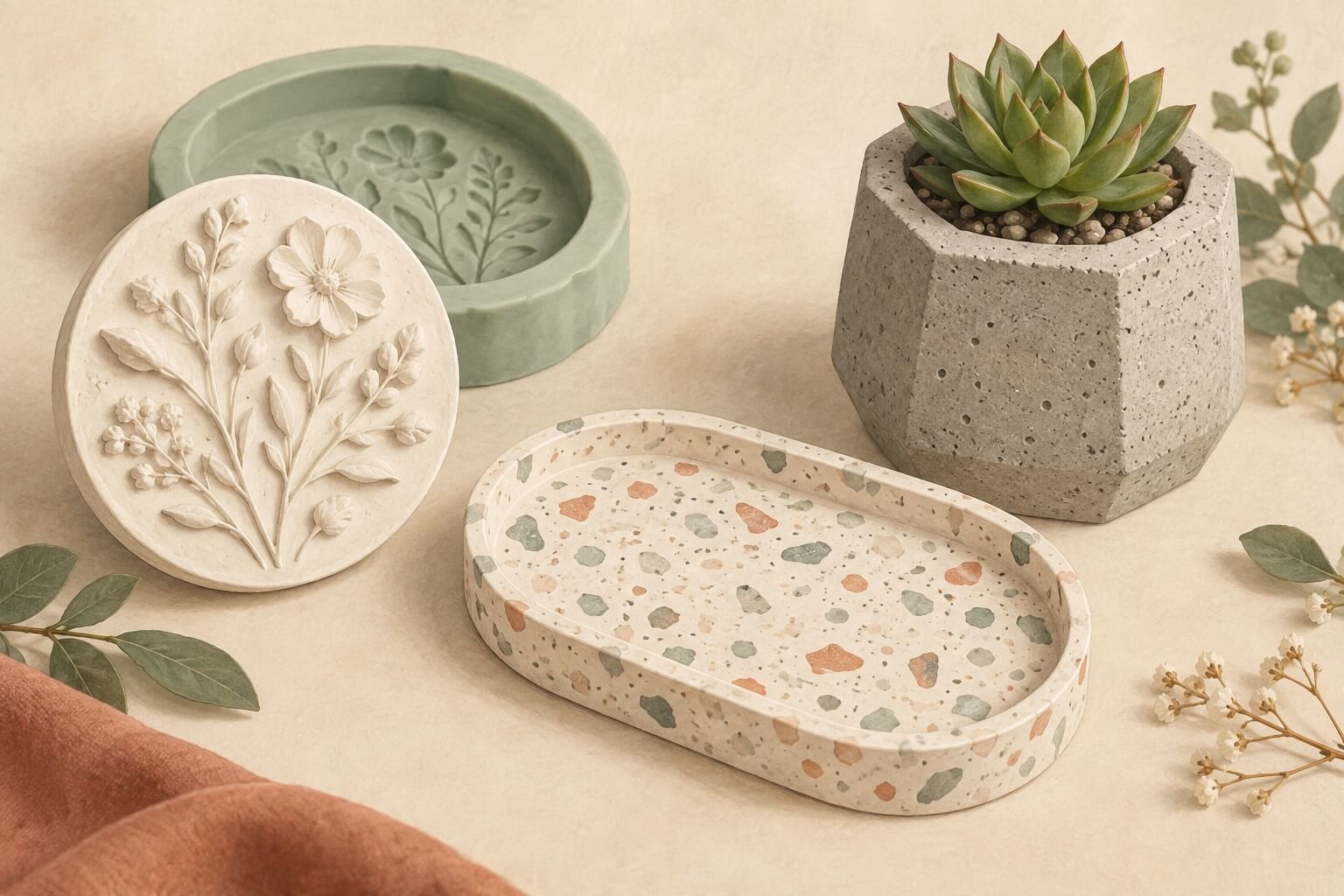
Best for » Coasters, terrazzo-style décor, planters, light architectural panels.

  • Eco profile — Water-based binder with no VOCs; the bulk filler is gypsum, a naturally occurring mineral.
  • Workability — Mix-and-pour like plaster but cures to a tougher, slightly flexible composite that can be demolded in ≈30 min.
  • Finish — Accepts pigments well; can be sanded, sealed, or left raw for a matte stone look.
  • Cost — ~US $6–9 per kg in bulk—midway between plaster and premium epoxy.
  • Watch-outs — Not transparent; needs a food-safe sealant for kitchenware.

Gelatin / Glycerin Reusable Mold Gel

Best for » Short-run casting, kids’ crafts, sugar art, soap, chocolate, or any project where permanent silicone molds feel overkill.

  • DIY recipe — ≈10 parts water : 2 parts unflavored gelatin : 1 part glycerin; heat and pour into a frame, let set, then use like a flexible mold.
  • Planet-friendly — Fully biodegradable and compostable.
  • Reusable — Simply re-melt in a microwave and recast up to a dozen cycles.
  • Limitations — Softens above ≈40 °C (104 °F) and shrinks slowly over weeks, so it isn’t suited for long-term storage molds.

Lignin-Based Bio-Epoxy

Best for » Thin coatings, river-tables, and high-gloss art where clarity matters but fossil inputs don’t.

  • What it is — Partially substitutes bis-A epoxide with lignin—the aromatic polymer recovered from paper-mill waste streams.
  • Carbon savings — Up to 50 % lower cradle-to-gate CO₂ compared with standard epoxy, according to recent life-cycle studies.
  • Handling — Mix ratios and cure temps mirror conventional epoxies, so existing molds & tools still work.
  • Trade-offs — Slight amber tint and ~10 % softer Shore D, so skip for knife handles or surfboard fin boxes.

Bio-Polyurethane Clear Coats

Best for » Tumblers, hardwood tables, bar-tops—anywhere a tough, food-safe gloss is needed.

  • Formula — Plant-oil polyols (castor, soy) reacted into a one-part water-borne polyurethane; zero BPA, ultra-low VOC.
  • Durability — Abrasion and UV resistance rivaling two-part epoxies after a 24-hour cure at room temp.
  • Application — Brush, roll, or dip—no solvent fumes, tools rinse with warm water.
  • Drawbacks — Not a casting medium; self-levels only in thin films <2 mm.

PLA (Polylactic Acid) Bio-Plastic

Best for » 3-D-printed inserts, decorative blanks, or hybrid wood/PLA “river” boards finished with plant-based oils.

  • Source — Made by fermenting corn- or sugar-cane starch into lactic acid, then polymerizing.
  • Eco angle — Renewable feedstock and ~60 % less CO₂ than petro-ABS in production, but note: it requires industrial composting to break down fully.
  • Cost — Filament ≈ US $20 per kg; printed parts can substitute colorful resin pours for jewelry and inlays.
  • Caveat — Glass-transition at 60 °C (140 °F) means hot-car dashboards are a no-go.

How to Choose the Right Alternative

Step-by-Step Decision Checklist

  1. Define the end-use. Is the piece decorative, load-bearing, waterproof, or food-contact?
  2. Rank your priorities. Transparency, hardness, outdoor durability, weight, and budget rarely all score a “10” at once.
  3. Audit your workspace. Can you tolerate dust (cement), moisture sensitivity (plaster), or 24-hour cure windows (bio-epoxy)?
  4. Plan finishing & disposal. Know in advance whether you’ll seal, sand, recycle, or compost the finished object.

Quick-Pick Guide

  • Need crystal-clear pourable gloss? Choose a lignin- or plant-oil-based bio-epoxy such as Entropy Super Sap CLR (≈ US $130 / gal—about 15 % cheaper per gallon than West System 105/205)
  • Stone-look décor on a budget?  Go for plaster of Paris (≈ US $10 / 2 kg) or lightweight concrete.
  • Outdoor planters & terrazzo coasters?  Pick Jesmonite AC100 (≈ US $47 / 2.8 kg set).
  • Food-safe gloss coats for tumblers or wood tables?  Brush on a bio-polyurethane clearcoat.
  • Kids’ crafts or one-off molds?  Try a gelatin + glycerin mold gel; fully compostable and microwave-re-meltable.
  • 3-D printed inlays & jewelry blanks?  Use PLA bioplastic filament (≈ US $20 / kg).

Where to Buy These Alternatives

  • Jesmonite AC100 & AC730

    FTC Creative and MAD • MAYKER ship US-wide; starter kits from US $35 and 2.8 kg sets around US $47.
  • Plaster / Lightweight Concrete

    Big-box hardware stores such as Home Depot or Lowe’s (DAP Plaster of Paris 2 kg ≈ US $10).
  • Lignin- or Plant-Based Bio-Epoxy

    Specialty chemical suppliers like UPM BioPiva or Specific Polymers offer quart and gallon kits; prices vary but are typically 15 % cheaper per usable gallon than West System 105/205.
  • Bio-Polyurethane Clear Coats

    Eco-Tuff bio-polyurethane clearcoat—1 gal matte, satin, or gloss ≈ US $88 direct from Eco Safety Products or via Amazon.
  • Gelatin & Glycerin

    Bulk gelatin (culinary grade) + vegetable glycerin from Amazon, local bakery-supply, or craft stores; both are inexpensive and shelf-stable.
  • PLA Filament

    Amazon, MatterHackers, or local makerspaces stock 1 kg spools (eSun, Hatchbox) around US $20-25.

Tips for Working with Resin Alternatives

  • Mold Prep • Seal porous molds with an acrylic sealer or petroleum-free wax; for Jesmonite or plaster, a thin coat of cooking spray works in a pinch.
  • Mixing Ratios • Weigh powders & liquids; volume cups can swing 5-10 % and ruin cure times.
  • De-Bubbling • Tap the mold on a table or mist the surface with isopropyl alcohol to pop surface bubbles—no VOC torch needed.
  • Coloring • Use water-based or oxide pigments for Jesmonite and plaster; alcohol inks work for bio-epoxy but may bleed in polyurethane.
  • Sealing & Finishing • Plaster/concrete stay absorbent—finish with food-safe beeswax, acrylic sealer, or plant-oil polyurethane for stain resistance.
  • Cure Windows • Jesmonite demolds in 20-30 min but reaches full strength in 24 h; bio-polyurethane needs at least 48 h before heavy use.
  • Sanding Safety • Always wet-sand Jesmonite, plaster, or concrete outdoors; fine gypsum dust can irritate lungs.
  • Eco-Disposal • Small scraps of plaster or Jesmonite can be crushed and mixed into new batches as aggregate; gelatin molds are fully compostable.

Final Thoughts: Is Resin Still Worth It?

Epoxy (and other petroleum-based resins) remains the gold standard when you need an ultra-clear, high-strength, waterproof barrier. Marine-grade systems routinely reach about 7,800 – 9,000 psi tensile strength with flexural moduli above 350,000 psi, giving them the muscle to bond boat hulls and carbon-fiber parts. Optical-grade formulas also deliver more than 90 % light transmission across the visible spectrum when properly UV-stabilized.

The downside is their environmental footprint: a recent life-cycle assessment pegs conventional liquid epoxy at roughly 6.6 kg CO2-eq per kilogram of resin produced—several times higher than mineral binders such as plaster or concrete. Newer lignin- or sucrose-based epoxies can cut global-warming impact by about 20 – 25 %, yet they are still thermosets that cannot be remelted or easily recycled.

  • Use resin when: you truly need glass-level clarity (river tables, jewelry domes), structural laminates exposed to harsh conditions, or ultra-thin topcoats that must resist chemicals and standing water.
  • Skip resin when: the object is purely decorative, bulk-cast, or destined for indoor display; eco-alternatives such as Jesmonite, plaster, or bio-polyurethane deliver comparable aesthetics at a fraction of the cost and carbon.
  • Consider hybrid builds: pour the bulk in Jesmonite or lightweight concrete, then add a 1–2 mm bio-epoxy “veneer.” You keep the crystal gloss but slash overall resin use by up to 80 %.

Bottom line: Resin is still worth it—but only where its unique trio of clarity, strength, and impermeability are non-negotiable. For everything else, the eco-smart (and wallet-friendly) move is to reach for one of the greener substitutes profiled above or adopt a hybrid strategy that uses resin sparingly.

Pro tip: If you do choose resin, buy the smallest kit that meets your volume, weigh mix ratios precisely to avoid leftovers, and dispose of cured scraps through your local hazardous-waste program.

Frequently Asked Questions

Can I make jewelry without using epoxy resin?

Yes. Small pieces such as earrings or pendants can be cast in Jesmonite AC100, lightweight concrete, polymer clay, or even PLA filament printed on a 3-D printer. Finish them with a clear, non-yellowing sealant to add stain resistance and shine.

What’s the safest alternative for children’s crafts?

Gelatin-glycerin mold gel and corn-starch air-dry clay are fully non-toxic and biodegradable. Both mix with common kitchen ingredients, cure at room temperature, and require no solvents or respirators.

Do plaster, concrete, or Jesmonite items need sealing?

Only if they will encounter moisture, food, or heavy handling. A thin coat of water-based acrylic sealer, beeswax, or plant-oil polyurethane prevents stains and makes cleaning easier while preserving breathability.

Are “bio-based” or “eco” epoxies biodegradable?

No. Plant-based epoxies replace part of the petroleum feedstock with lignin or vegetable oils, cutting carbon footprint, but they still cure into a non-recyclable thermoset. Dispose of cured scraps through household hazardous-waste programs.

Will resin alternatives yellow over time?

Mineral systems like plaster, concrete, and Jesmonite remain color-stable indoors. Bio-epoxies are UV-stabilised but may develop a slight amber tint after prolonged sunlight exposure; top-coating with a UV-blocking varnish slows this process.

Can any of these materials be used for food-contact surfaces?

Yes, but only when sealed with an FDA-compliant, food-safe finish. Bio-polyurethane clear coats and certain butcher-block oils meet this standard. Always verify the product’s technical datasheet and allow full cure time before use.

How do I dispose of leftover or broken pieces?

Hardened plaster and concrete are inert and can go in regular trash or be crushed for aggregate fill. Gelatin molds are compostable. Cured epoxies and polyurethanes should be taken to a local hazardous-waste facility; never pour uncured liquids down the drain.